
A Closer Look at the Oaks & Hickories of Tennessee

Oak and hickory are two of the most common tree groups in Tennessee, and November is the perfect month for studying their leaves and finding acorns and nuts.
Both oak and hickory are extremely beneficial to wildlife and humans. However, they aren't always easy to identify and differentiate. The fact that both sometimes hybridize can make ID even more difficult.
Leaves are one way to identify trees, but leaves can vary - even on the same tree. For instance, the upper leaves on a tree can look different from its lower leaves. Bark can also aid in identification, as can twigs, buds, flowers, tree shape, size, and habitat. Comparing acorns and nuts is one of the best ways to separate the various oak and hickory species. But sometimes it takes all of the above methods (and more!) to ID trees.

Remember: Hickories produce nuts while oaks produce acorns. Also, hickories have pinnately compound leaves (multiple leaflets branching off a single central stem), and oaks have simple, non-compound leaves.
First let's take a closer look at some of the oaks you might find in Tennessee. Oaks in our area are divided into two groups: red oaks and white oaks. Generally red oaks have pointed tips while white oak leaves have rounded lobes and tips.
Red Oaks
NORTHERN RED OAK (Quercus rubra) - A native to most upland areas of Tennessee, this species is characterized by dark bark which is striped with long, smooth, whitish plates separated by deep furrows - often giving it a "candy cane" appearance. It prefers deep soil with plentiful moisture. The acorns take two years to mature. The cup is flat like a saucer and encloses only the lower one-quarter to one-third of the nut. Northern Red Oak acorns often look like they are wearing a French beret!
As for its leaves, the indentations (sinuses) between the leaf lobes are shallow, rarely cutting more than halfway to the central vein (midrib). The leaves turn a rich red or reddish-brown during autumn. Like most oaks, its leaves often stay on the tree into the winter months. Its acorns provide food for many types of wildlife, and it is the most important lumber species of all red oaks. Its hard, heavy, shock-resistant wood is used for flooring, furniture, millwork, railroad crossties, mine timbers, and fence posts. A popular shade/street tree due to its good form and dense foliage. Historically, tea of the inner bark was used for dysentery, a gargle for sore throats, and a skin wash for poison ivy and burns.

SHUMARD OAK (Quercus shumardii) - This species is the largest of the red oak group, frequently attaining heights of 100-125 feet and diameters of 4-5 feet. Often mistaken for Northern Red Oak, Shumard leaves have pointed lobes with many soft, bristle-like tips. The lateral lobes are conspicuously longer and thicker toward the end of the leaves, distinguishing them from other red oaks. Overall, Shumard Oak leaves appear more circular in shape than Northern Red Oak, which is more oval. The leaves frequently turn scarlet in the fall.
Also called Swamp Red Oak, it prefers sunny bottomlands. It grows fast and produces acorns every two to four years that are used by squirrels, deer, turkeys, and songbirds. It's often marketed for flooring, furniture, interior trim, and cabinetry. Where I live in Davidson County, Shumard Oak is by far the most numerous red oak species.

BLACK OAK (Quercus velutina) - This member of the red oak group is one of the most common trees of eastern deciduous forests. Its thick, glossy, dark green, pointed-lobed leaves often turn orange or red in fall. The leaves generally are larger and more oval-shaped than Shumard, and have deeper sinuses than Northern Red. Its bark is typically darker and rougher than Shumard and Northern Red. The species name "velutina" is a reference to the underside of the leaves, which are covered with fine hairs. Also distinguishable by the yellow or orange inner bark, formerly a source of tannin, medicine, and yellow dye for cloth. An important tree for both wildlife and timber, it prefers moist, rich, well-drained soils. Its large, spreading branches form an open crown that is often quite irregular. The fruit, an acorn that occurs singly or in clusters of two to five, is about one-third enclosed in a scaly cup and matures in two years.


SHINGLE OAK (Quercus imbricaria) - This species stands apart from most red oaks in that its leaves lack deeply cut lobes. Its shiny, leathery leaves are long and broad with an entire margin; they are lance-shaped and tipped with a single bristle. Its small, somewhat bitter acorns mature about 18 months after pollination and are an important food for squirrels, ducks and many birds. Yellow-brown to russet-red fall foliage persists through winter.
The common name refers to use of the wood for shingles by the pioneers, a practice continued today. Frequently found growing in uplands with good drainage. It's often used as an ornamental/shade tree and is also suitable for hedges, screens and windbreaks. Quercus is the ancient classical name for the European oaks; imbricaria means "overlapping," as with shingles.

Others red oaks you might find in Tennessee include Southern Red Oak, Pin Oak, Scarlet Oak, Blackjack Oak, Willow Oak, Water Oak, Cherrybark Oak, and Nuttall Oak.


White Oaks
WHITE OAK (Quercus alba) - A massive, long-lived tree recognized by its widespreading crown, large horizontal branches, and round-lobed leaves which turn burgundy in fall and often remain on the tree into winter. The upper bark often becomes shaggy. Its sweet acorns are an excellent source of food for wildlife. Highly prized for its beauty and superior wood, which is used for veneer, basketry, barrels, flooring, and boat construction.
White Oaks over 150 feet tall, 8 feet in diameter and 600 years old have been found in old growth stands. Often planted as ornamental/shade tree because of its broad round crown, dense foliage and fall coloration. Can produce acorns prolifically, but good crops are irregular and occur every 4 to 10 years. Its acorns were made into flour by Native Americans for bread making.

CHINKAPIN OAK (Quercus muehlenbergii) - A member of the white oak family and quite common around the cedar glade habitat where I live. Its light gray scaly bark and narrow, coarsely toothed leaves separate it from other oaks. Known for its sweet acorns, which provide an excellent source of food for wildlife, especially ruffed grouse, turkeys, deer, and squirrels.
The acorns mature in a single season and are enclosed for almost half their length in a scaly cup that has hairs on the scales, thus creating a fringe along the margin of the cup. Rarely grows in size or abundance to be commercially important, but its heavy wood makes excellent fuel. Also used for railroad ties. Prefers alkaline soils on limestone outcrops and upland slopes, usually with other hardwoods.

POST OAK (Quercus stellata) - This coarsely branched oak with a dense, oval crown often has a scrubby, rugged growth form because it tends to grow on dry, sandy or gravelly, nutrient-poor sites. When growing in grassy barrens and dry upland forests, it can be a small to medium-sized tree; however, some specimens can grow quite large in favorable soil. Easily identified by its thick, leathery, cross-shaped leaves, although the leaf shapes vary by region.
The common name comes from the fact that the wood is often used for fence posts. Quercus is the ancient classical name for the European oaks; stellata refers to the dense covering of star-like hairs on the leaves and young twigs. Its cavities are often used as homes for wildlife, and birds use its strong leaves for nesting material. Its small acorns provide food for deer, turkeys, raccoons, and many songbirds.

BUR OAK (Quercus macrocarpa) - One of the most distinctive acorns in Tennessee can be found on Bur Oak. The acorns have unusual, very deep fringed cups, and are the largest acorns of all native oaks. These mighty trees often have a massive trunk to go along with their low, large, spreading branches. They are more common in the Midwest, but you can occasionally find them in Middle Tennessee.
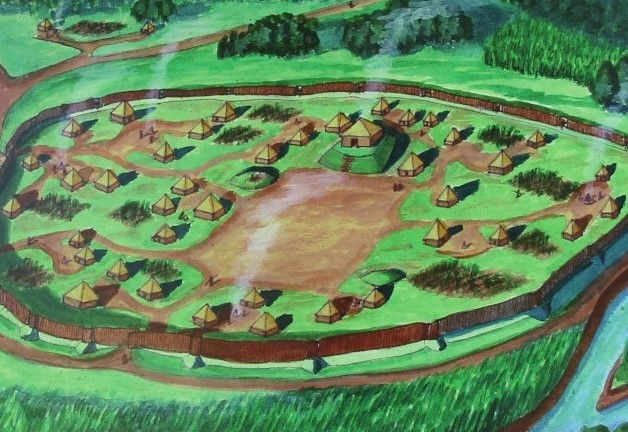
They grow on both moist and dry sites, and you will often see them growing singly. One spot where you can see a couple of large Bur Oak trees is Sellars Farm State Archaeological Area in Wilson County. I also recently saw many of these along the Cumberland River at Ravenwood Park in Hermitage. Bur Oak's large fiddle-shaped leaves are also unique and stand out compared to other oaks.

Other white oaks found in Tennessee include Swamp White Oak, Chestnut Oak, Swamp Chestnut Oak, and Overcup Oak.


Hickories
PIGNUT HICKORY (Carya glabra) - This slow-growing tree features pear-shaped, somewhat bitter nuts which are an important food for wildlife, including raccoons, foxes and black bears. Named in colonial times for the consumption of the small nuts by hogs.
Pignuts are distinguished from other hickories by their tight bark, slender twigs, and thin nut husks that resemble a pig’s snout. Its leaves are often smaller than other hickories and normally have five leaflets. The wood is used for a variety of products, including fuel for heating, tool handles and skis. In earlier times, the wood was used for wagon wheels. Prefers high, dry sites and has good yellow fall color.

BITTERNUT HICKORY (Carya cordiformis) - A slender but tall hickory which typically develops several primary ascending limbs, forming an arched shape. Has the largest range of the hickories and is the fastest growing of the group. Also known as Swamp Hickory, it produces long, graceful catkins and hard-shelled nuts. Its nuts are of little value for human consumption because of extreme bitterness, which also make them unfavorable to most wildlife.
The leaves attain a bright yellow color early in the fall and holds its foliage longer than other hickories. Typically has 7-9 leaflets. Distinguishable from other resident hickories by its yellow bud scales and its nuts, which have a four-winged husk. Its close-grained hardwood is highly shock resistant, which makes it excellent for tool handles. The leaves are high in calcium and greatly improve the soil as they decay. Also a choice fuel for smoking meats. Early settlers used oil extracted from the nuts for oil lamps.

MOCKERNUT HICKORY (Carya tomentosa) - This medium-to-tall tree is recognized by its dark bark, which is rough and thin with shallow furrows and narrow platy ridges. Its bark does not peel like shagbark hickories. The underside of the leaves, which are densely covered with soft hairs, also separate it from other hickories. Typically has 7-9 rather large leaflets. Leaves often turn bright golden-yellow during autumn. Tiny flowers are clustered together to form a hanging catkin.
The name "mockernut" refers to the difficulty in extracting the small, edible nut from its large, thick shell. At maturity, the sides of the nut split apart so that there are four pieces of thick husk surrounding the seed. The nuts provide food for squirrels, deer, small rodents, raccoons, and turkeys. A black dye can be extracted from the bark by boiling it in vinegar solution. The wood is prized for furniture, flooring, tool handles, baseball bats, skis, and veneer. It has a very high fuel value, both as firewood and as charcoal, and is excellent for smoking meat.

SHAGBARK HICKORY (Carya ovata) - A medium or large tree recognized by its bark, which is light gray, fissured and peels off in long, curling strips, giving it a "shaggy" appearance. Grows in a wide range of habitats, from dry woods to low, shaded forests. The thick-shelled nuts are sweet and once were a staple food for Native Americans. Also an important food for deer, squirrels and many birds. Moths, butterflies, lizards, and even bats often roost under the loose bark. Pioneers made a yellow dye from the inner bark.
The bright, yellow-green, compound leaves (which generally consists of 5 leaflets) become golden in early fall. Differs from our other resident shagbark, Southern Shagbark Hickory, mainly by its larger leaflets and nuts, and its hairy stems. The tough, resilient properties of the wood make it suitable for products subject to impact and stress, including tool handles, athletic goods and agricultural implements.

SOUTHERN SHAGBARK HICKORY (Carya carolinae-septentrionalis) - Also known as Carolina Hickory, this is the most common hickory species where I live. Mature trees are recognized by the thin, blackish twigs, small buds, and shaggy bark, which separates into strips that often curl away from the trunk on both ends. As compared to the northern variety (Carya ovata), Southern Shagbark has smaller, lance‑shaped leaflets, smaller nuts, and smooth, slender twigs.
Where present, Southern Shagbark is often the dominant hickory and usually doesn’t grow with other shaggy‑barked hickories. The wood is hard, strong, and tough and often used for tool handles. The leaves release a pungent odor when bruised or crushed. Its edible nut has a husk that splits into four sections.

SHELLBARK HICKORY (Carya laciniosa) - This tall, slow-growing, long-lived tree is similar in appearance to Shagbark Hickory; however, its leaves are typically longer and have seven leaflets, while Shagbark usually has five. Shellbark is further distinguished from the other hickories by its orange‑brown dotted twigs. Also called Kingnut because it produces the largest nuts of all the hickories.
As compared to Shagbark, Shellbark typically prefers moist-to-wet areas, fertile bottomlands, river floodplains, and swampy forests, although sometimes the two species can overlap. The thick-shelled nuts are sweet and are popular with squirrels. The wood is hard, heavy, strong, and flexible, making it a favored wood for tool handles. The Latin name laciniosa, meaning with flaps or folds, refers to the shaggy bark.

RED HICKORY (Carya ovalis) - This medium-to-large tree was once considered by many botanists to be a hybrid species between Shagbark Hickory and Pignut Hickory, but it is now considered an individual species. This one is fairly common around my home in Davidson County. Prefers to grow on dry, upland soils.
The nuts are small, thick-shelled, often quite sweet, and serve as an important food for many types of wildlife, including turkeys, raccoons, deer, small rodents, and squirrels. The Greek "ovalis" refers to the egg-shaped nuts. Generally has seven leaflets per leaf but sometimes five or nine. Its petiole (leaf stalk) bases are often red. The leaves have beautiful yellow fall color. The bark on young trees is smooth, but it becomes finely shaggy with age; mature bark often develops close interlacing shaggy-topped ridges.

Others hickory species found in Tennessee include Pecan, Sand Hickory, and Water Hickory.

We hope you enjoyed learning about some of the oaks and hickories found in Tennessee! Do you have a favorite oak or hickory tree? Have you found any interesting specimens out there? If so, let us know!
-----
In other news, we are looking forward to a couple of fun events which NEST will be attending in November. Both are open to the public, and we hope you can join us.
On Nov. 13, NEST will be teaming up with TennGreen Land Conservancy for a hike at Lamar Cedar Glades and Woodlands in Rutherford County at 10 a.m. This private site features many rare plant species, including Glade Phlox, Tennessee Milk Vetch, and Limestone Fameflower. For more info or to sign up, go to https://www.eventbrite.com/e/lamar-cedar-glades-woodlands-autumn-walk-tickets-1997454187244
Then on Nov. 14, NEST will be at Shelby Bottoms Nature Center for "Leave the Leaves" Day. Leslie Anne and I will have a table at the event, which runs from 10 a.m. until 2 p.m. Celebrate the bounty, beauty and benefits of leaves during this annual gathering. Come for crafts, critters, and to learn about why and how you should celebrate leaves on the ground. For more details, go to https://www.nashville.gov/departments/parks/events/leave-leaves-day-0/2026-11-14
-----
Thanks so much for taking the time to read our newsletter and follow us! We appreciate our supporters more than you know, and we hope to meet more of you in the coming months.
We wish you all a safe and happy month of November.
All the best,
Jason and Leslie Anne


Comments