
Exploring Wilson County's Scenic & Historic Archaeological Site

Updated: Aug 3
In Tennessee, August isn't exactly the ideal month for outdoor excursions. It's generally hot and toasty. Animals aren't as active. There are fewer wildflowers. Nature is relatively quiet. The dog days of summer, that's what my dad called them.
So this month I decided to write about a place that's the perfect destination for these lazy summer days. It's open daily and is easily accessible. The trail is short and flat. There's a beautiful creek and some shade trees. There are benches if you wish to sit a spell.
Furthermore, the site features a surprising variety of flora and fauna (even during the summer months) and has great historical significance. It's a place that's special to me for many reasons. I'm talking about Sellars Farm State Archaeological Area in Lebanon, TN.

The State of Tennessee acquired the site in 1974, and in 2004 Sellars Farm State Archaeological Area opened to the public. I was on hand for the opening ceremonies, and since then I have led many hikes there. In fact, for a couple of years while working for Tennessee State Parks, I was basically overseeing the site - maintaining trails, educating the public, and leading weekly interpretive hikes.
On weekends, I would often set up an interpretive table near the entrance and greet visitors, telling them about the site and answering any questions. It was a fulfilling experience, and I have many wonderful memories of long summer days spent there.
However, I was always surprised by the number of visitors who said they had never been to Sellars Farm and didn't know of its significance. Even several locals who lived nearby told me they had passed by the entrance many times unaware of what was actually beyond the parking lot. Truthfully, I think the name of the site occasionally confuses people. Some who visited the "farm" said they fully expected to see barns and chickens and cows!

Before I discuss the natural wonders found at Sellars Farm, I first want to mention the site's historical significance. Quite simply, it is one of the best preserved Native American villages in the Southeast.
Sellars Farm was the site of a fortified prehistoric Native American village which was occupied from about 1000 A.D. to 1350 A.D. This was known as the Mississippian Period. This period is characterized by: fortified villages with earthen platform mounds and plazas; intensive agriculture; shell-tempered pottery; and elaborate iconography representing a widespread, shared belief system of the larger, nucleated populations of this period.
Two practices unique to inhabitants of the Middle Cumberland River region during this period are burials in stone box graves and the production of stone statues representing elite ancestors.
As part of this Middle Cumberland Mississippian culture that extended from Southern Kentucky eastward to the Highland Rim, the site now known as Sellars Farm was on a trade route southward toward Georgia. But for some unknown reason these Cumberland villages were abandoned before the arrival of European settlers. The area became the hunting ground of historic period tribes, including Cherokee, Chickasaw and Shawnee.
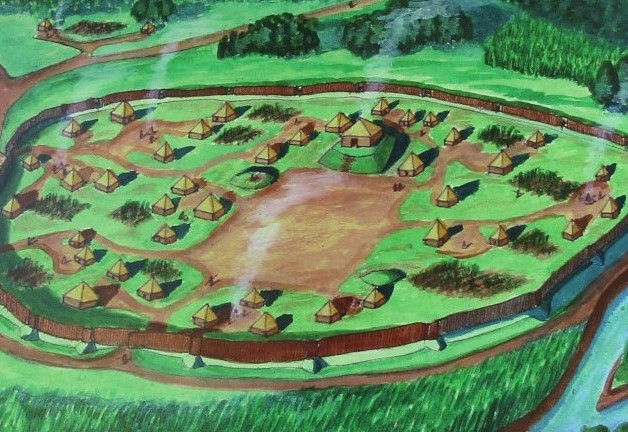
The Sellars Farm site features a large, flat-topped pyramidal platform mound on which was built a structure of importance, likely either a ruler's dwelling or a council house. Dirt for the mound was carried by villagers using baskets.
The mound is about 15 feet high, 138 x 120 ft. at the base, and 95 x 75 ft. at the top. During an excavation in 1877, Frederic W. Putnam of Harvard's Peabody Museum discovered that the mound was built in three stages, with ash on two of the lower sections. No burials were found. Objects uncovered here included ceramic and stone disks, mica fragments, charred cane matting, and charred corn cobs.
When you visit the area today, the mound is certainly prominent and is the most visible sign of the former village. On one side of the mound is a square-shaped field which was the village's plaza area. Characteristic of Mississippian Period villages was a central plaza on which were held games, public events and ceremonies. The plaza was surrounded on three sides by houses.

During his excavation in 1877, Putnam observed about 100 "house rings" in the village, 10 to 50 feet wide and up to three feet high. The actual houses were square and constructed of wood, river cane, mud and thatched roofs. This construction method is also known as wattle and daub. The house rings have since been eroded by repeated plowing. Today the only evidence of these houses is below the ground surface.
The village was surrounded by a wall measuring 2,700 feet long with a 3-4 ft. high outer earthen wall, a 3-4 ft. deep ditch, and a 4-5 ft. high inner earthen wall topped by a wooden palisade, probably of cedar logs. There were three more entries on the southern and southeastern sides. An earthen causeway crossed the ditch at these points. The village's palisade wall, which formed an oval, enclosed about 10.2 acres.
At every 110 feet along the palisade wall were projecting earthen bastions on which were watchtowers. Two of the earthen projections, along with a segment of the walls, remain today because the area was too rocky for plowing. The ditch can still be detected in the open field to the south.

The site also features the remains of a burial mound, 41 feet in diameter and three feet high. Burials were arranged in the form of hollow squares in the outer area of the mound in 2-3 irregular rows and 3 tiers. The 61 graves excavated by Putnam were interred in boxes made of stone slabs, which was a characteristic of the Middle Cumberland culture.
After the Revolutionary War, Nathaniel Lawrence was granted land in 1786 that contained the Sellars Farm site. It was then inherited by his descendants, the Lindsleys. In 1877, Mrs. Nathaniel Lindsley invited archaeologist Dr. Frederic W. Putnam of the Peabody Museum at Harvard to excavate the site.
In 1909, James Sellars purchased the site and cultivated the village area. Between 1923 and 1939, four stone human statues were uncovered, all believed to have been plowed up at the Sellars’ farm. Three of these statues are now at the McClung Museum of Natural History and Culture at the University of Tennessee in Knoxville.
Another highlight of a visit to Sellars Farm is scenic Spring Creek, which flows along the northern edge of the village. On its northern and eastern bank is a dramatic rock bluff.

Spring Creek flows northward into the Cumberland River. The village was likely built in one of its bends so that it would provide natural protection on three sides. The creek also produced food, fish and freshwater mussels, whose shells were crushed and used in the shell-tempered pottery.
As you follow the trail alongside Spring Creek, you'll get an up-close look at the fertile woods and winding stream bank. The low, rich creek flood plain was surely cultivated to grow crops like corn, squash and beans to help feed the residents of the village. You'll also likely notice the native river cane which was used by the villagers for house construction.
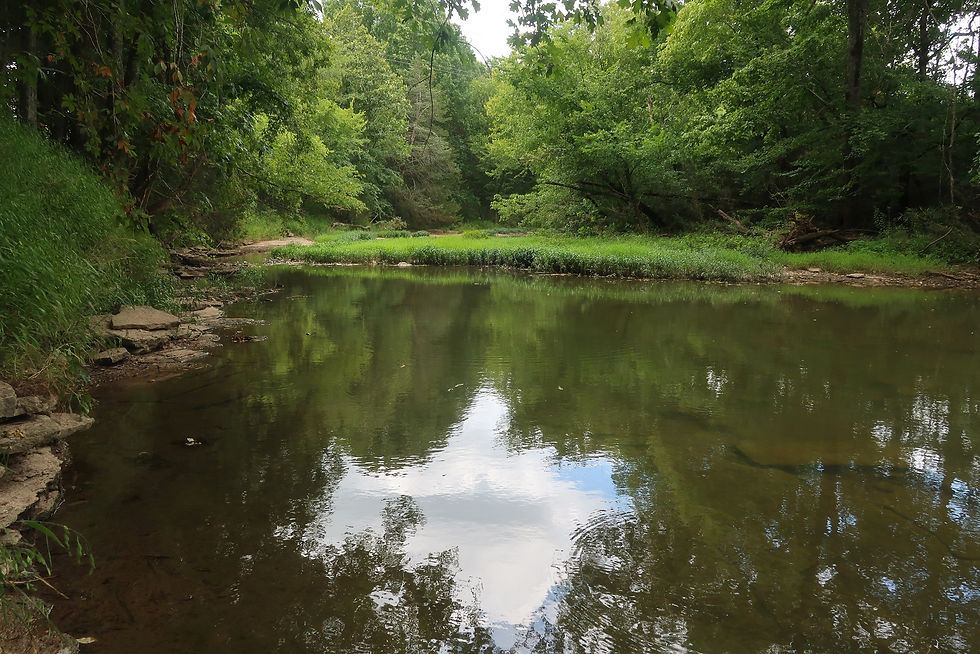
In addition to its historical significance, the 65-acre Sellars Farm site is an impressive mix of fields, woods and creek bottom, which results in a variety of flora and fauna. The summer months are an especially good time to visit as the fields along the trail feature many unique plants and wildflowers.
Like many areas of Middle Tennessee, deer, rabbit and squirrel are common here. But some lesser-known mammals can also be found, including American Mink. If you’re quiet and patient, you might spot one of these elusive, well-camouflaged critters scampering along the banks of Spring Creek.
Coyotes are often heard yelping and howling at night, but they are rarely seen. Other mammals here include red fox, groundhog, opossum, raccoon, muskrat, beaver, and bobcat.
Insects are prevalent at Sellars Farm, and during wildflower season visitors may spot numerous butterflies. Swallowtail species found here include Eastern Tiger, Pipevine, Black, Giant, Zebra, and Spicebush.
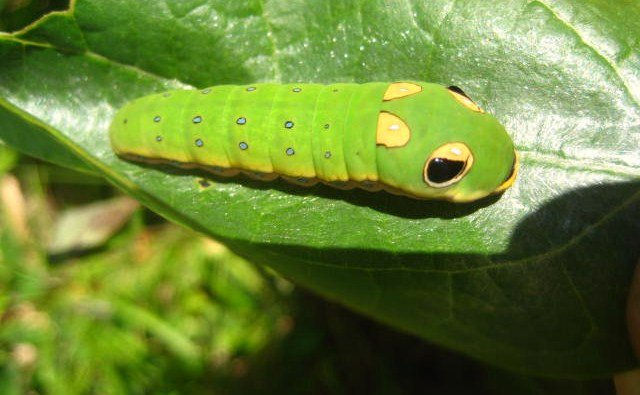
Also present are such butterflies as Monarch, Gulf Fritillary, Juniper Hairstreak, and Common Buckeye. The giant silkmoths Luna, Polyphemus and Cecropia have been sighted during evening hikes.
In the warm summer months of July and August, listen for cicadas buzzing during the day, while katydids take over after sunset with their calls of "katy-did-katy-didn't" from the trees. At dusk, the fields of Sellars Farm are often aglow with fireflies.
One of the most noteworthy residents of Sellars Farm is the Tennessee Clubtail dragonfly (Phanogomphus sandrius). This rare species is found in only five counties in Tennessee, with Sellars Farm having the best population of any protected area.
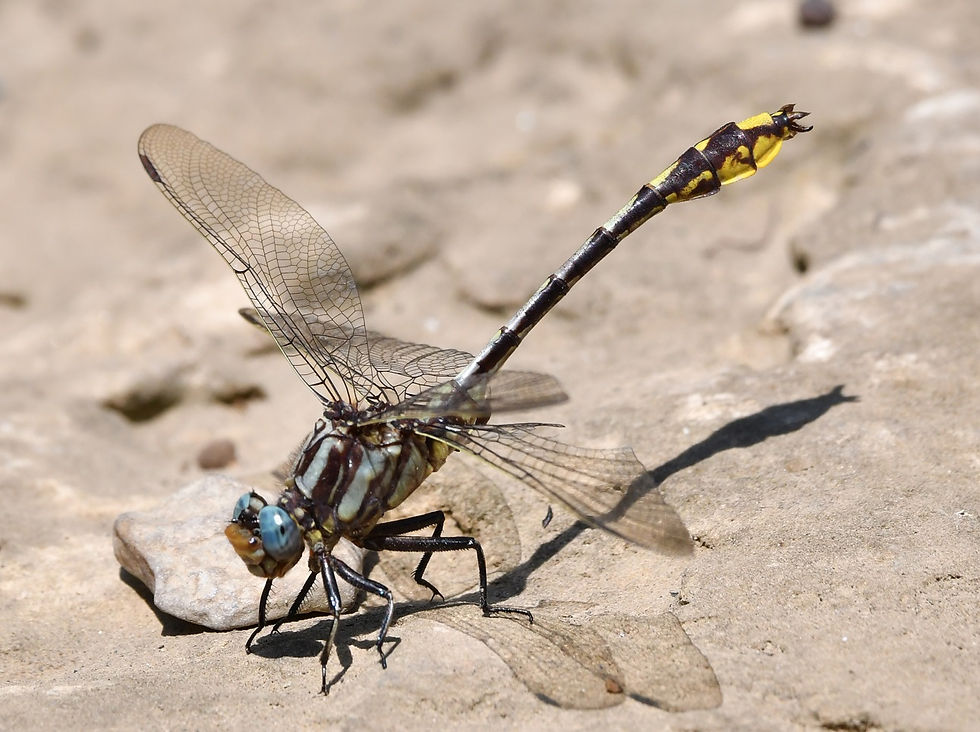
Tennessee Clubtails prefer slow streams with bare bedrock shores, as well as clean, unpolluted water. The meadows are used by this dragonfly for feeding and maturing, with flight times mostly in May and June. The males will often perch on sunny bedrock shores.
The mix of habitats at Sellars Farm results in a variety of bird species. Some spend the spring and summer seasons here, while others are merely passing through. Warblers heard here include Common Yellowthroat, Prairie Warbler and Northern Parula. If you sit beside the creek during the spring, you might even detect a Louisiana Waterthrush.
One of the more unusual birds that nests here is the Yellow-breasted Chat, which spends much of its time in the thick scrub and blackberry tangles. This bird emits a variety of curious whistles, squawks and grunts, which may sound like you're hearing the calls of several different birds. But no, it's only the "buffoon of the briar patch" - the Yellow-breasted Chat.

Yellow Goldfinch, Indigo Bunting and Eastern Towhee also thrive in this habitat. Wild turkey is common as well. You may spot a Great Blue Heron wading in the creek or hear the chattering of a Belted Kingfisher as it flies over the water.
Spring Creek is a popular gathering spot for frogs. In early spring the Upland Chorus Frog calls from the water's edge, sounding like someone rubbing their finger across the teeth of a comb.
Later in spring, listen for Northern Cricket Frog (sounds like two marbles click-clacking together) and Fowler's Toad (a drawn-out "waaaah" call), which is often found on drier sites and along the trails. A common call from the trees during spring is the Cope's Gray Treefrog with their trilling sound. Green Frog, Southern Leopard Frog and Spring Peeper have been heard near the water.

Common reptiles found at Sellars Farm include Eastern Box Turtle and Eastern Fence Lizard. The fence lizard, well camouflaged with its grayish brown color, spends much of its day basking on fence posts, trees, stumps, and rocks.
Spring Creek is home to a variety of fish. Largemouth, smallmouth, redeye, and spotted bass are all found here, along with freshwater mussels, crayfish, and various darters. Other interesting species include Warmouth, Longear Sunfish, Channel Catfish, and Warpaint Shiner.
An assortment of wildflowers can be found at Sellars Farm from early spring through the autumn months. Early season highlights include spectacular creekside displays of Wild Blue Phlox and Yellow Trout Lily. Look along the wooded trails for Virginia Spring Beauty and Early Buttercup.

Appearing later are Golden Alexander, Mayapple, Miami Mist, Glade Stonecrop, Foxglove Beardtongue, and Longsepal Beardtongue.
During summer look for Tennessee's state wildflower, Purple Passionflower, blooming in the meadows, along with Common Milkweed, Butterfly Milkweed, Green Antelopehorn Milkweed, and Anglepod climbing milkvine.
Other summer/fall blooms include Garden Phlox, Common St. Johnswort, Brown-eyed Susan, Wild Petunia, Giant Ironweed, White Crownbeard, Blue Mistflower, Yellow Wingstem, Great Blue Lobelia, Canada Goldenrod, and various asters.
White Crownbeard (aka Frostweed) is a tall plant with small white flowers. It’s noteworthy for producing unusual "frost flowers" on the first cold nights of the year. These striking ice formations are the result of water being forced out of its stem during cold weather. The plant is an important food source for Monarch butterflies, which feed on its late-summer blooms before migrating.

One of the most common plants found along the trails at Sellars Farm is Blackberry, which produces an edible fruit that ripens in June and July. But watch out for this plant’s sharp thorns!
The trail alongside Spring Creek features a population of native River Cane. The people who lived in this village during the Mississippian Period used the cane for house construction.
Sellars Farm boasts an impressive variety of trees, and one of the highlights is certainly Bur Oak, a white oak species that is uncommon in Tennessee. Bur Oak has unusual acorns - large and with deeply fringed cups - and leaves which look like fiddle heads. Several large specimens are located beside Spring Creek.

American Hornbeam, aka Musclewood, can be found near the creek, along with Swamp White Oak. Sassafras, which has a root beer-like aroma, is common along the trails. Native Americans made a tea by boiling its roots.
Honey Locust has large, sharp thorns along its trunk and a long seed pod which contains an edible, honey-like pulp. Osage Orange, with its gnarly branching, produces large green "hedgeapples" and quality wood which was once used for making bow and arrows.
Several species of hickory have been identified at Sellars Farm, including Shagbark, Pignut, Mockernut, and Bitternut. Their nuts were likely an important food source for the residents of this village.
Other trees found here include Sugar Maple, American Beech, Kentucky Coffeetree, Ohio Buckeye, American Elm, Slippery Elm, Black Oak, Shumard Oak, Northern Red Oak, Shingle Oak, Chinkapin Oak, Post Oak, and Black Cherry.

This is just a sampling of the natural wonders found at Sellars Farm State Archaeological Area. I hope this has piqued your curiosity so that you can plan a visit for yourself!
For more information about Sellars Farm, visit the Native History Association website: https://www.nativehistoryassociation.org/sellars.php
Here is more info from the Tennessee Department of Environment & Conservation website: https://www.tn.gov/environment/program-areas/arch-archaeology/state-archaeological-parks-areas/sellars-farm-state-archaeological-area.html
And here is a Sellars Farm profile on the TN History for Kids page: https://www.tnhistoryforkids.org/history/virtual-tours/sellars-farm/

Sellars Farm State Archaeological Area is open daily until sunset, so you can visit and take a hike there whenever you like. The trail is about a mile-and-half long. However, for the best experience I highly recommend taking a guided hike.
The Sellars site is now managed by Cedars of Lebanon State Park, and their historical specialist Pat Cummins is doing an outstanding job of programming there. With his background in the Native History Association, he is the ideal person to interpret this site.
Already this year Pat has led a variety of programs at Sellars, including sunrise and sunset hikes, and programs focusing on river cane, meteors, medicinal plants, aquatic critters, and more. Visit the Cedars of Lebanon State Park website to catch one of his hikes!
--- --- ---
As I mentioned in our last newsletter, NEST is taking a break from programs and hikes in July and August to focus on our Wildflower ID Class at Middle Tennessee State University in Murfreesboro. Leslie Anne has taught this class for almost 10 years now, and we are thrilled by the continued interest. We have gotten students from all over Tennessee, and even a few from other states. Many Tennessee Naturalist Program students and master gardener members have used the class to further their education on native plants.
Leslie Anne met her new group of students and taught the first class on July 26th. The classes will continue every Sunday through the end of August and will include a couple of field trips. The next NEST wildflower class will likely be in early 2027.
Our September schedule is filling up quickly, and we can't wait to tell you about some of our upcoming programs and hikes in our next newsletter! Until then, we wish you a wonderful and peaceful month of August.
All the best,
Jason and Leslie Anne


Comments