
October Spotlight: Autumn Leaves & Spooky Trees

It's finally arrived: the season of cooler weather, flannel shirts, warm drinks, and campfires. Following a summer of seemingly endless heat waves, I'm sure this is a welcome relief to many of you.
When I think of October in Tennessee, the first thing that comes to mind is fall foliage. Our state is known for its diversity of species and splendid autumn color. But due to the lack of rain these past few weeks, it's uncertain just how much color we'll see this year.
I also think of pumpkins and hayrides and trick-or-treaters and all things Halloween. And I recall some of my favorite spooky hikes and eerie sights along the trails. Yes, Mother Nature can raise goosebumps in her own special way.
So for this newsletter, I've decided to discuss some of my favorite autumn leaves and spooky trees...
Autumn Leaf: Sassafras
Sassafras (Sassafras albidum) is a fairly common tree in many parts of Tennessee and one of the first to show off its fall foliage. This year I saw my first colorful sassafras leaves back in late August.
This species is known for the aromatic, root beer‑like smell of its roots and bark. Native Americans used the tree for a wide range of medicinal purposes and also made tea from the inner bark and roots. They used the dried leaves as a spice to flavor foods. The leaves can also be ground to sweeten and thicken stews.
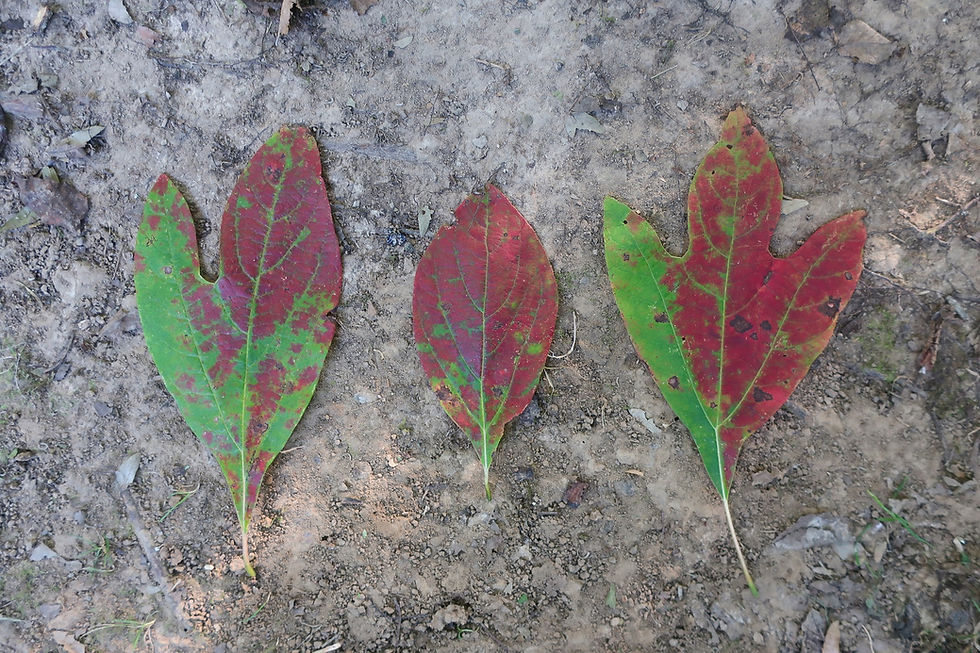
Sassafras is a colonial species that is often found growing in groves. The leaves vary in shape. Most are shaped like either a mitten, a “ghost,” or a football, and often you will find all three leaf shapes on the same tree. In autumn the leaves turn brilliant shades of yellow, orange and red. Sometimes it produces a unique salmon color.
For me, it's difficult to look up at a brilliantly colored sassafras tree, with its multi-shaped leaves, and not get happy autumn vibes.
Spooky Tree: Osage Orange
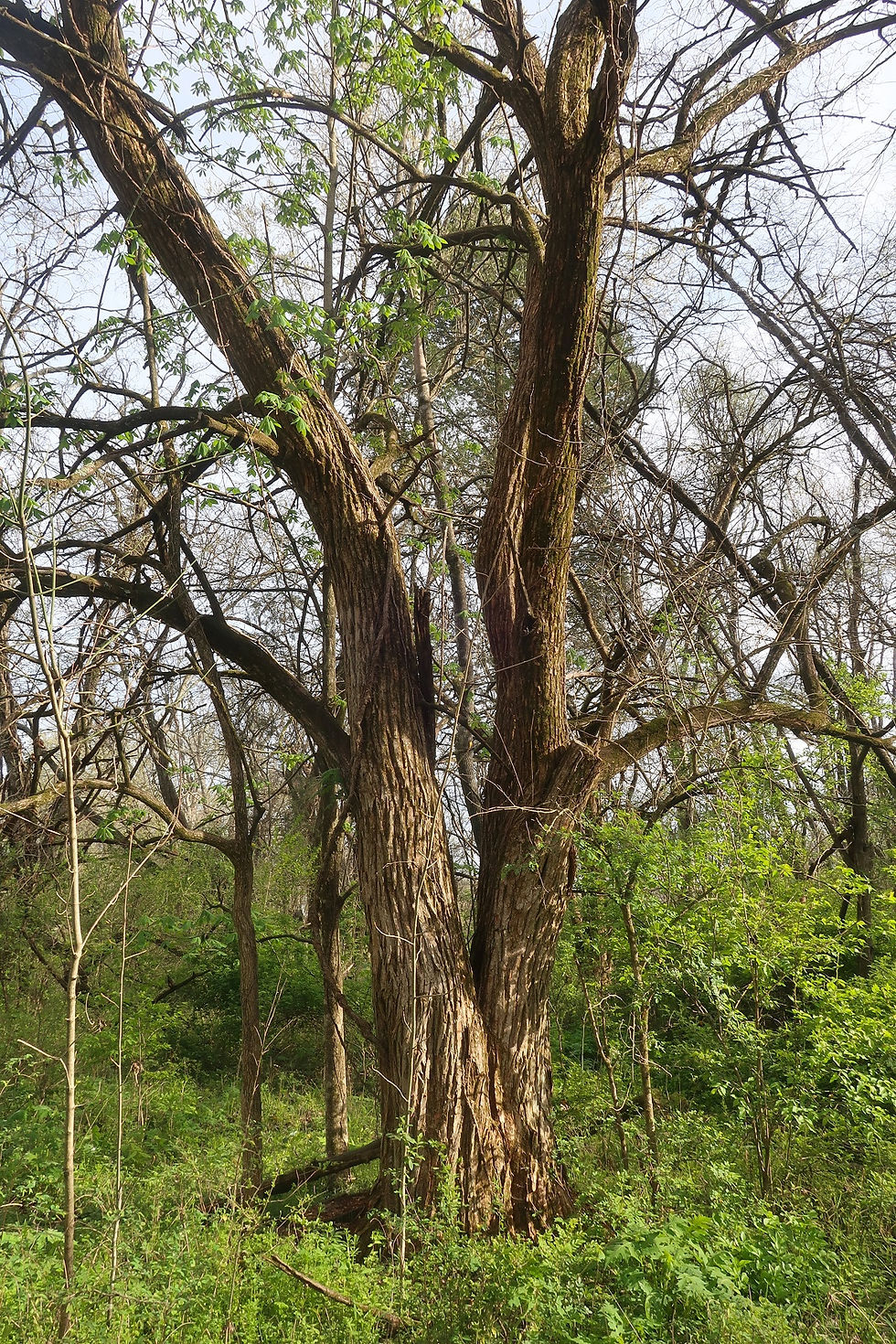
Osage Orange (Maclura pomifera) looks like a tree that belongs on a Halloween poster or in a Tim Burton movie.
These gnarly, misshapen trees have arching branches, thorns on their twigs, orange bark and surface roots (perfect for Halloween), and green, bumpy, softball-sized fruits hanging from their limbs. No, this isn't the tree you bring home to mom.
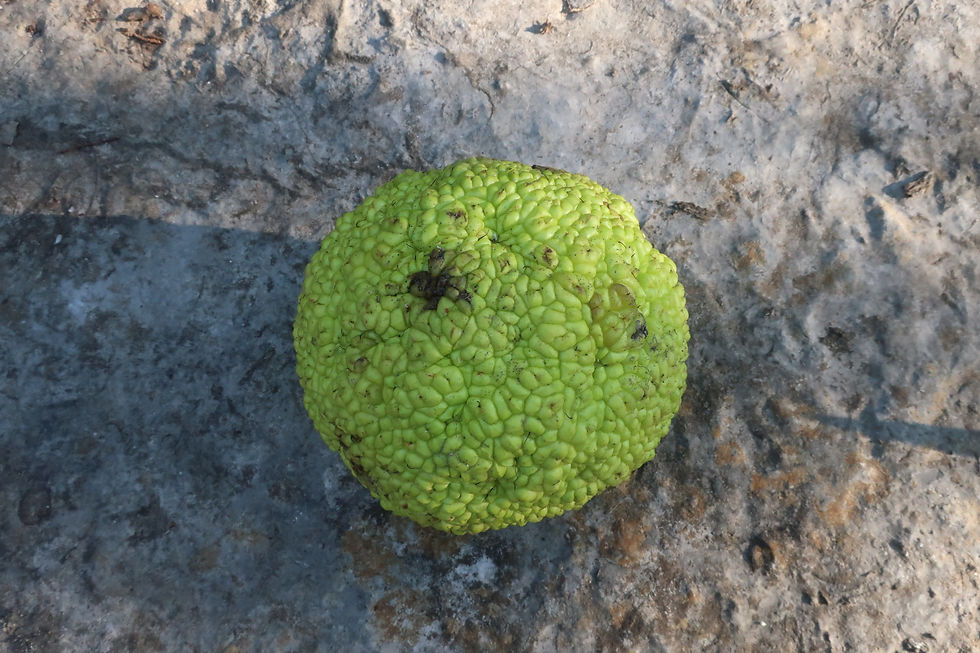
And what about those huge green fruits known as hedgeapples? Well, they aren't really apples. They're not oranges, either. Some people call them "milk balls" due to their milky sap. Others call them "monkey brains" because, well... they do sort of look the part. As you might have guessed, these odd fruits are not edible to humans. Most animals ignore them as well.
So what are these green cannonballs good for? I've heard of brothers and sisters throwing them at each other. I also know people who set up bowling pins in their neighborhood and use them for sidewalk bowling.
There's a theory that the animals which actually ate these fruits, including woolly mammoths and giant ground sloths, are now extinct. So nowadays the fruits drop to the ground and just sort of sit there.
On the positive side, these trees do have strong wood. Native Americans often used the wood to make bows for their arrows. So there's that.
Poor Osage orange. It doesn't get much respect. But I'm rather fond of them. Also, if you wanna get into the Halloween spirit (or make a scary movie), then Osage orange is your go-to tree.
Autumn Leaf: White Oak
White Oak (Quercus alba) is certainly one of our most impressive trees. This massive, long-lived tree is recognized by its widespreading crown, large horizontal branches, and round-lobed leaves.
White oaks over 150 feet tall, 8 feet in diameter and 600 years old have been found in old growth stands. Highly prized for its beauty and superior wood, white oak is used for veneer, basketry, barrels, flooring, and boat construction.
Its sweet acorns are an excellent source of food for wildlife. The acorns were also made into flour by Native Americans for bread making. It's often planted as ornamental/shade tree because of its broad round crown, dense foliage and fall coloration.
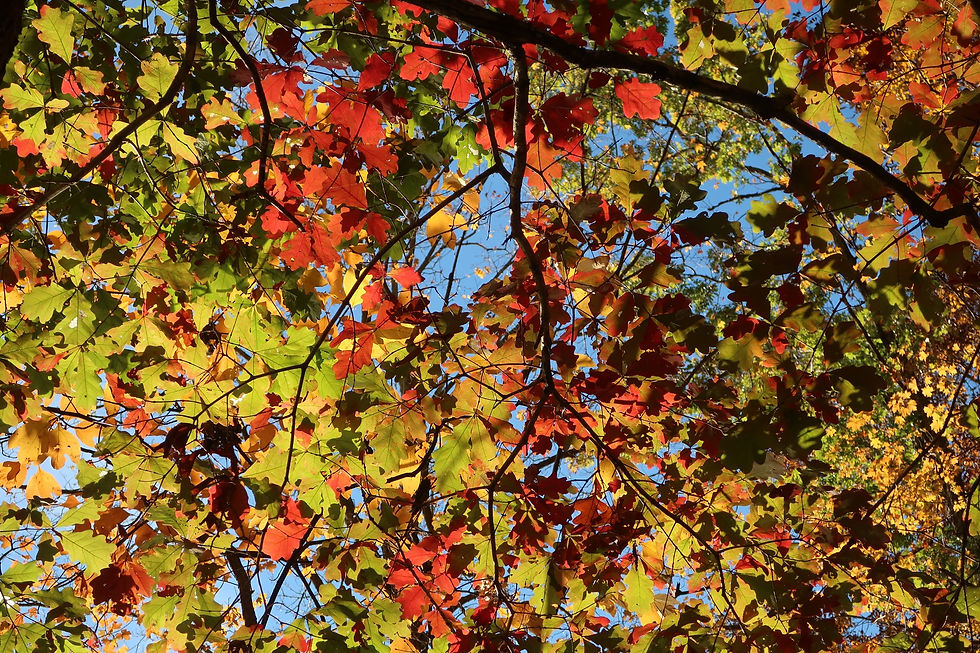
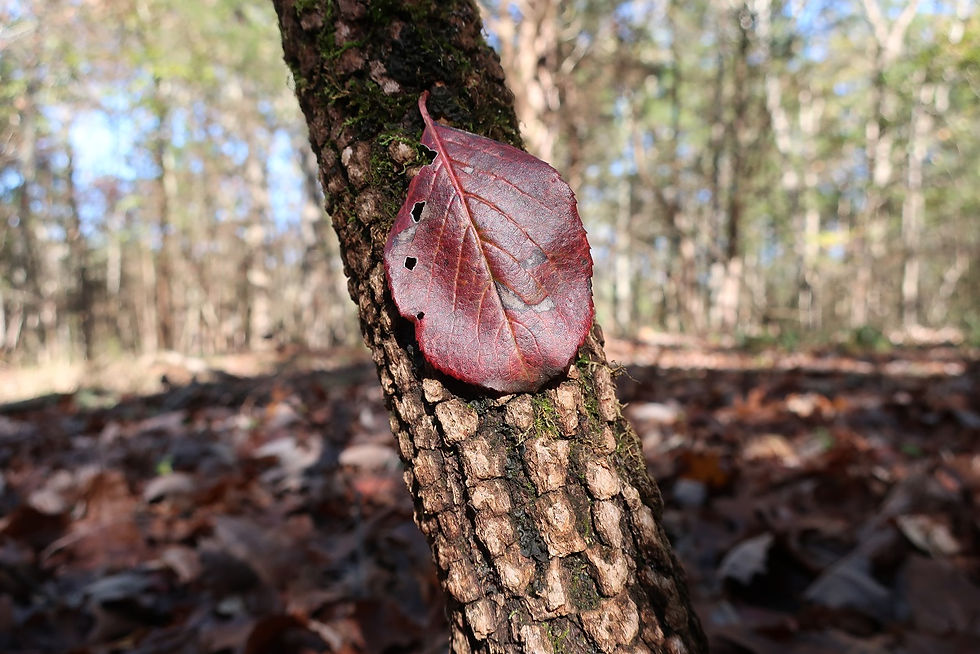
Many trees have red leaves during autumn, but the color of white oak is often a bit more unique. I would call it burgundy. Sounds rather classy, doesn't it? Whatever you wanna call it, the color is beautiful and unique among Tennessee oaks. The leaves often remain on the tree well into the winter months.
If you've never experienced a majestic white oak changing over from green to burgundy, do yourself a favor and seek one out!
Spooky Tree: Roughleaf Dogwood
If you're walking along a trail in October and see hundreds of tiny eyeballs staring at you from a dense thicket, don't be alarmed: It's probably just a dogwood.
Roughleaf Dogwood (Cornus drummondii) is a clumping shrub or small tree with flat-topped clusters of creamy-yellow flowers and hard, white fruit on reddish brown twigs. The upper surface of the leaves is covered by short, stiff hairs, giving it a rough feel and thus its name.
It's uncommon in the wild and mostly found around forest borders. It sometimes forms a dense thicket that is used as a hedge, border, or as cover for wildlife. It has dark red foliage during the fall.
At least forty species of birds are known to feast upon the fruits, which ripen in late summer and early fall. And, yes, these fruits look like creepy little eyeballs. It's one of the more unusual tree fruits in nature, and it's fitting that they tend to hang around and leer at you throughout the month of October.
But don't be skeered. It's just Mother Nature having a little Halloween fun with you.

Autumn Leaf: Black Gum
Like Sassafras, Black Gum (Nyssa sylvatica) is one of the first tree species in Tennessee to change colors. You may see brilliant color from this tree even during the summer months.
Black gum is known for its splendid fall foliage, which ranges from yellow, orange, red, scarlet, and purple. The bark is grayish-brown, and the mature bark often becomes blocky.
This species produces small, greenish-white flowers in the spring, which are an excellent nectar source for bees. In other words, it's also a good honey tree. The bluish-black fruit, which ripens in late summer or early fall, is consumed by a variety of birds and other wildlife. Its fruits are edible but sour.

Black gum trees are normally 30-50 feet tall, but can grow up to 75 feet. It's also known as Black Tupelo, Sour Gum and Pepperidge.
Historically, pioneers used the fibrous woody tissue of its broken twigs as a toothbrush substitute. In fact, I've talked with several folks who remember their families using black gum twigs as toothbrushes.
Brilliant fall color AND a toothbrush tree?! Black gum gets bonus points in this survey.
Spooky Tree: Honey Locust
Really? Honey Locust (Gleditsia triacanthos) a scary tree?
Many farmers would probably say so. Although they might add a few colorful profanities. That's because I've talked to a few farmers who had their tractor tires punctured by those pesky honey locust thorns.
Also, ask any raccoon that has attempted to climb a honey locust tree, and they will likely give you a horrific account of the experience. Honey locust isn't for the faint of heart.
This species is recognized by the long, needle‑sharp thorns on its trunk. Historically, hard thorns of younger trees were used as nails.
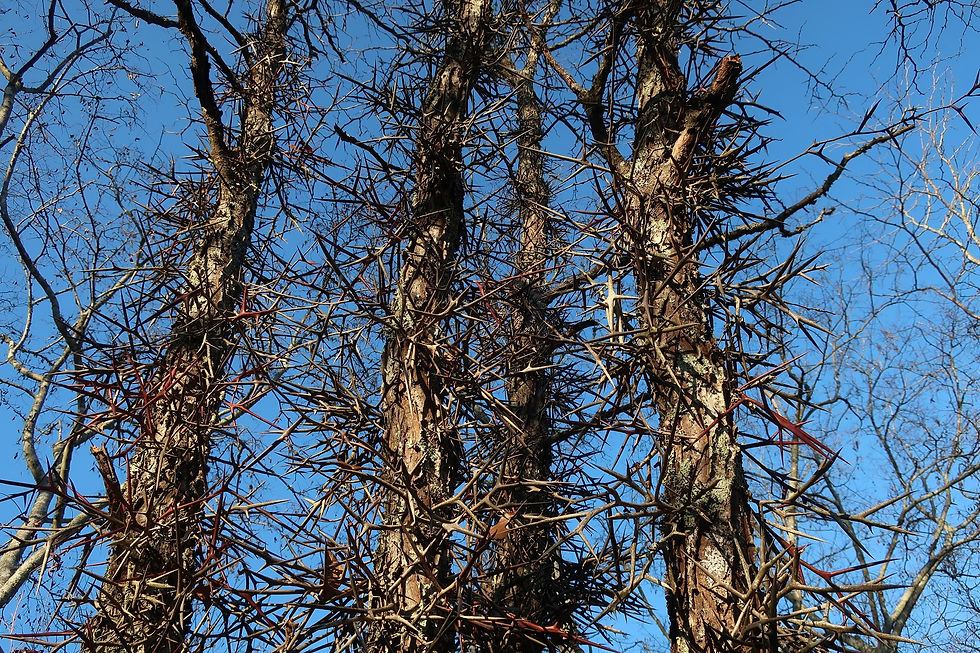
The strongly scented cream-colored flowers appear in late spring, and the fruit - a long, flat, bean-like pod called a legume - matures in the fall. The sticky, honey-like pulp inside the fruit, called locust bean gum, is edible and sweet, and is used in candies. So there's another Halloween connection!
When looking for this species, keep an eye out for the sharp thorns on the trunk and the long, hanging pods during autumn. Or else just listen for farmers and raccoons cursing.
Autumn Leaf: Hickory
Hickory species are known for their bright golden-yellow fall color. Many times I have walked under a canopy of hickories during October and gazed up at the brilliant glow of yellow leaves backlit by the sunlight.
In my neck of the woods, several species of hickory put on a memorable autumn show, including Mockernut, Pignut, Bitternut, Red, Shagbark, and Shellbark.
Mockernut is recognized by its dark bark, which is rough and thin with shallow furrows and narrow platy ridges. Its bark doesn't peel like shagbark hickories. The underside of the leaves, which are densely covered with soft hairs, also separate it from other hickories.
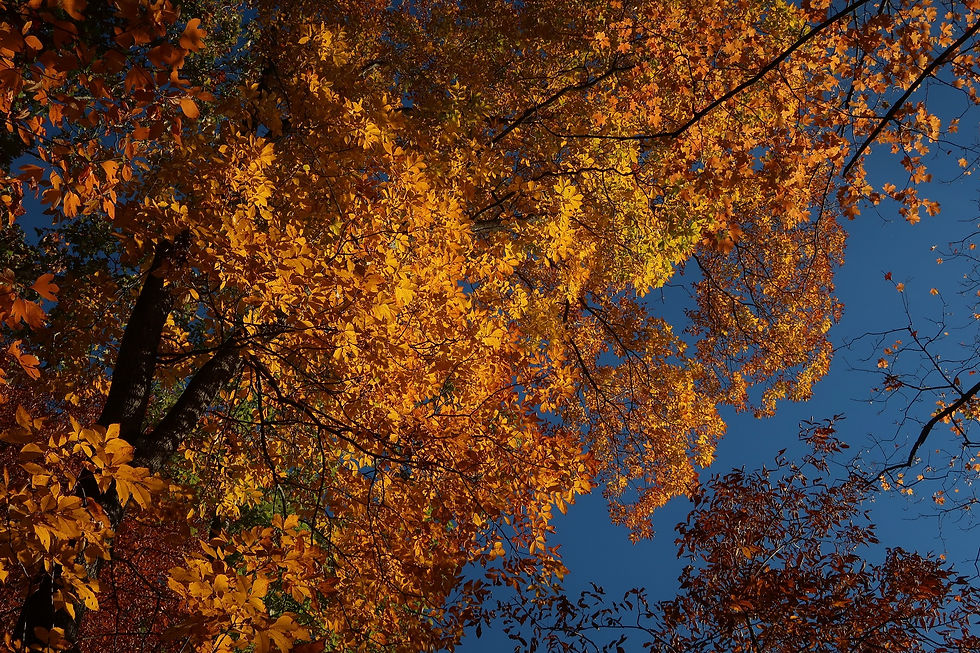
Pignut are distinguished from other hickories by their tight bark, slender twigs, and thin nut husks that resemble a pig’s snout. Its leaves are often smaller than other hickories and normally feature five leaflets.
Bitternut has the largest range of the hickories and is the fastest growing of the group. The leaves attain a bright yellow color early in the fall and holds its foliage longer than other hickories. Distinguishable from other hickories by its yellow bud scales and its nuts, which have a four-winged husk.
Red hickory has egg-shaped nuts and generally seven leaflets per leaf but sometimes five or nine. Its petiole (leaf stalk) bases are often red. The bark on young trees is smooth, but becomes finely shaggy with age. Mature bark often develops close interlacing shaggy-topped ridges.
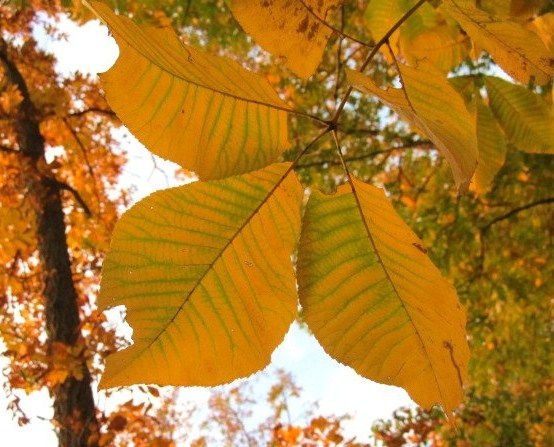
Shagbark is recognized by its shaggy bark, which separates into strips that often curl away from the trunk on both ends.
Shellbark is similar in appearance to shagbark; however, its leaves are typically longer and have seven leaflets, while shagbark usually has five. Shellbark is further distinguished from the other hickories by its orange‑brown dotted twigs. It's also called Kingnut because it produces the largest nuts of all the hickories.
I hope you get the chance to walk under a tunnel of brilliant golden-yellow hickory leaves this autumn.
Spooky Tree: American Sycamore
At first glance there seems to be nothing spooky about a sycamore. But just wait until the sun goes down and the full moon rises.
American Sycamore (Platanus occidentalis) is one of the tallest deciduous trees in the U.S. and commonly found growing along streams, lakes and ponds. Its often massive trunks can reach up to 8 to 12 feet in diameter.
Its easily recognized by its brown and white mottled bark, which becomes totally white on the upper trunk and branch surfaces. And that's where things begin to get spooky. During the full moon, the white upper trunk often seems to be hovering and glowing in the distance... like a ghost! Thus its nickname of “ghost tree.”
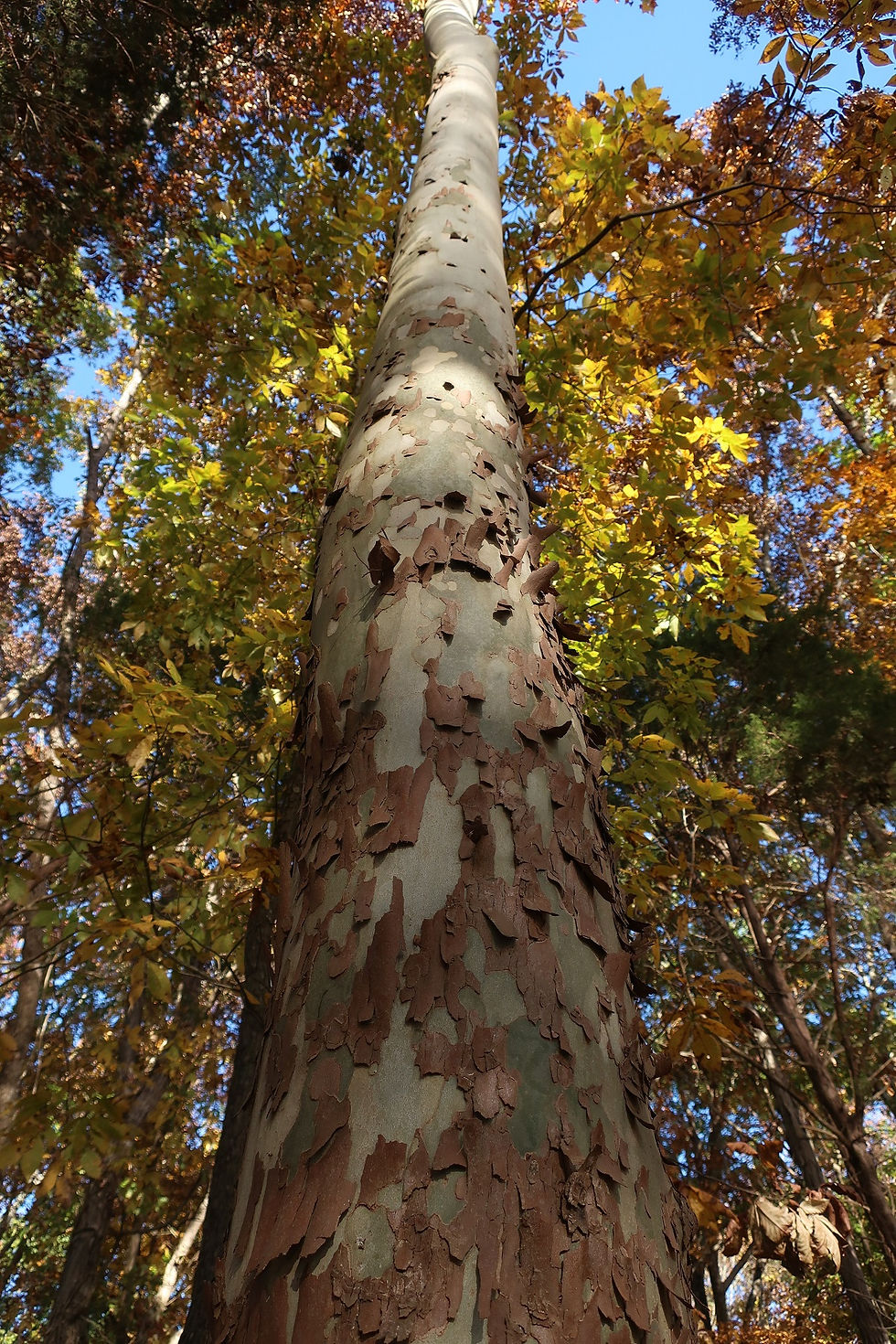
Globular, ball-like fruits hang on trees through winter, breaking up or falling off the following spring. Native Americans used the trunks to make dugout canoes.
Hollow sycamore trees are used as dens for owls, bats, squirrels, and raccoons. Before widespread European settlement, the hollow trunks of old, giant trees were often homes for chimney swifts, and even sheltered early settlers.
In other words, be careful before entering a ghost tree; there may already be someone (or someTHING) living in there.
Autumn Leaf: Sweet Gum
Sweet Gum (Liquidambar styraciflua) is another species that produces splendid fall color.
This tree is known for its star-shaped leaves and spiky, globe-shaped fruit. The branches and twigs sometimes have corky wings, similar to winged elm.
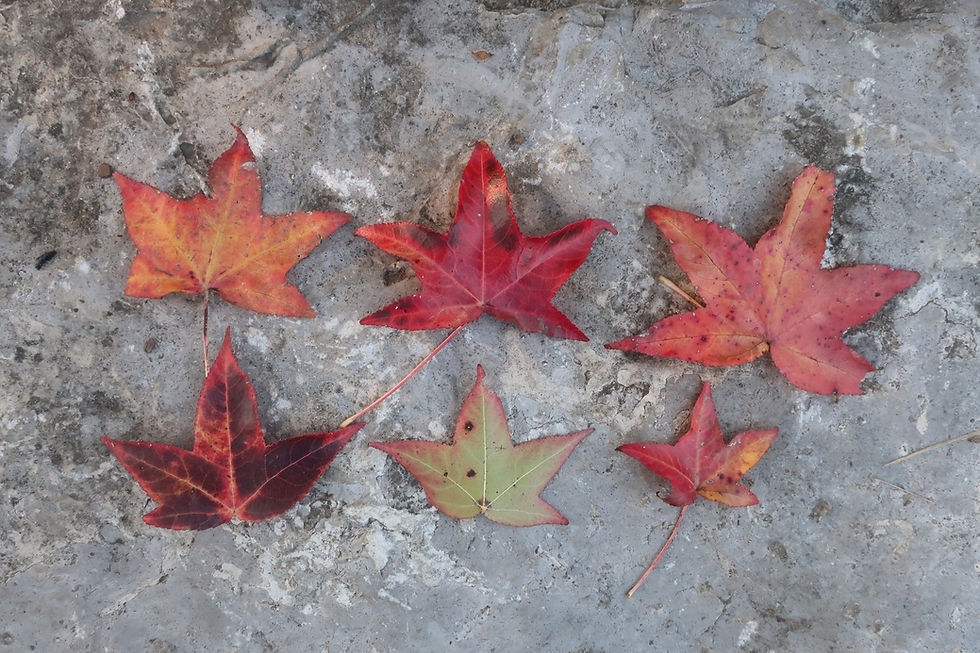
The common name refers to the aromatic "gum" that oozes from wounds to the tree. Historically, this gum was used medicinally as well as for chewing gum.
So with this one, you get excellent fall color, star-shaped leaves, a gnarly, spiky fruit, AND chewing gum! Bonus points for sweet gum.
Spooky Tree: Common Persimmon
I admit that I can find nothing especially spooky about Common Persimmon (Diospyros virginiana). These trees have blackish bark that is broken into small, conspicuous blocks - similar in appearance to an alligator's back. Okay, I guess that's kinda spooky?
This species is highly adaptable and will thrive almost anywhere. The fruit is extremely astringent when green, but sweet and tasty when it turns reddish-orange in the fall. Ripe persimmons can be used to make puddings, cake, bread, and beverages.
The roasted seeds have been used as a substitute for coffee. Its flowers are useful in the production of honey. Also an important food for opossums, raccoons, skunks, deer, foxes, and birds. Heck, it seems everyone and everything enjoys persimmon fruit!
Then why am I including it as a spooky tree? It's because I went and did something silly. Many years ago I started a tradition of making a persimmon pumpkin for Halloween.
I always use a persimmon fruit for the head, and then I use other tree fruits for the nose and mouth. Anyway, you can see the results in the photo below. It won't win any "best pumpkin" awards at the state fair, but it makes me happy.
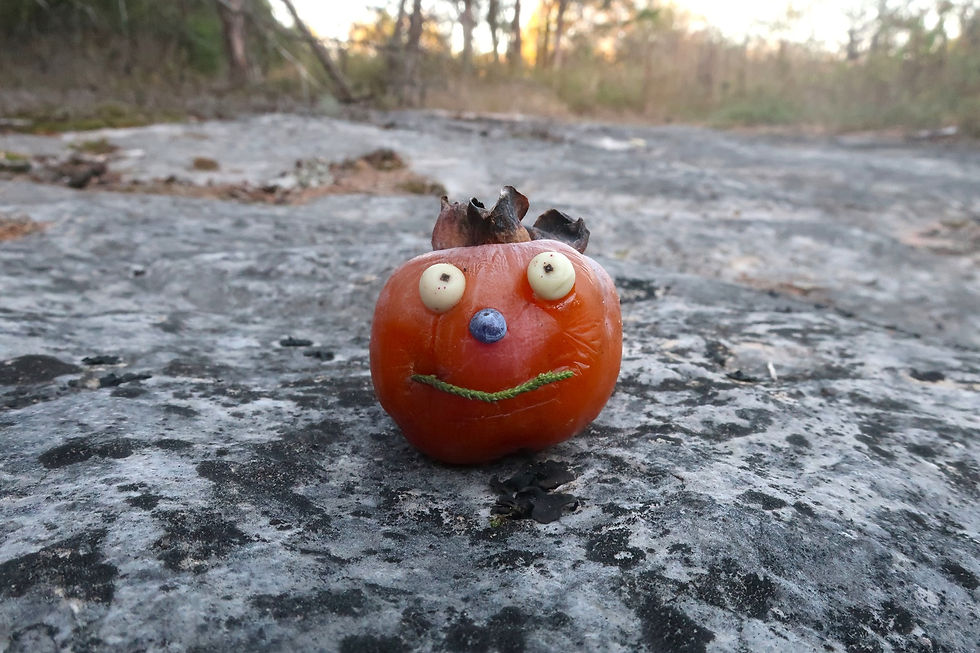
The genus name of persimmon is Diospyros, from the Greek, means fruit of the god Zeus.
Sorry, Zeus... I didn't mean to make a mockery of your favorite fruit by turning it into a pumpkin. But I do it with complete sincerity.
Autumn Leaf: Sugar Maple
Perhaps the most famous fall color in the Eastern U.S. comes from the Sugar Maple (Acer saccharum). One of the most common species in my neck of the woods, sugar maple is known for its fiery orange fall foliage. Some folks take fall road trips just to see these trees at their colorful peak.
The boiled sap of the tree is the commercial source of maple sugar and syrup, a use colonists learned from Native Americans. The trees are tapped early in the spring for the first flow of sap, when they have the highest sugar content.
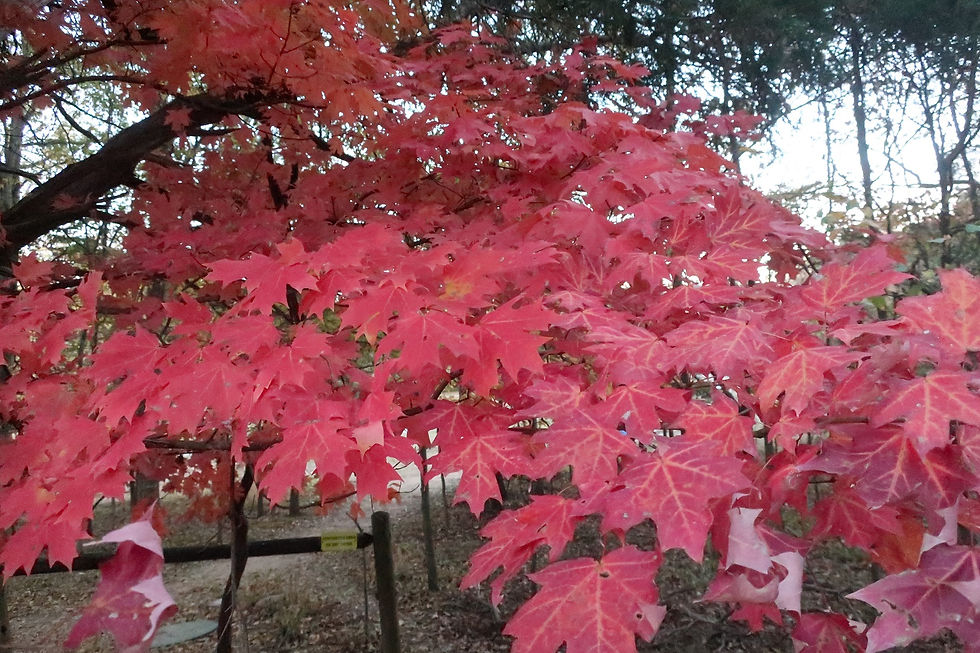
The bark is smooth in young trees, becoming rough and often blackened with age. It produces seeds in fall, unlike silver maple, which seeds during spring. Among the leading furniture woods, it's also used for basketball courts, bowling alleys and pins, flooring, boxes, and veneer.
Look for Yellow-bellied Sapsucker drill marks in a machine-gunned circle around some specimens. This woodpecker’s work causes sap to flow, attracting insects. Later the woodpecker returns to eat the insects for dinner and the sap for dessert. How's that for planning? The drill holes do not seriously harm the tree.
If you're looking for splendid fall color, you can't go wrong with the dependable sugar maple.
Spooky Tree: Sassafras
Okay, so we've already mentioned Sassafras previously in the fall color section. But they are spooky, too. I mean, for crying out loud, they produce leaves that are shaped like a ghost!
Brilliant fall color + ghost-shaped leaves = the ideal tree for the month of October.
Sassafras rules. Enough said.
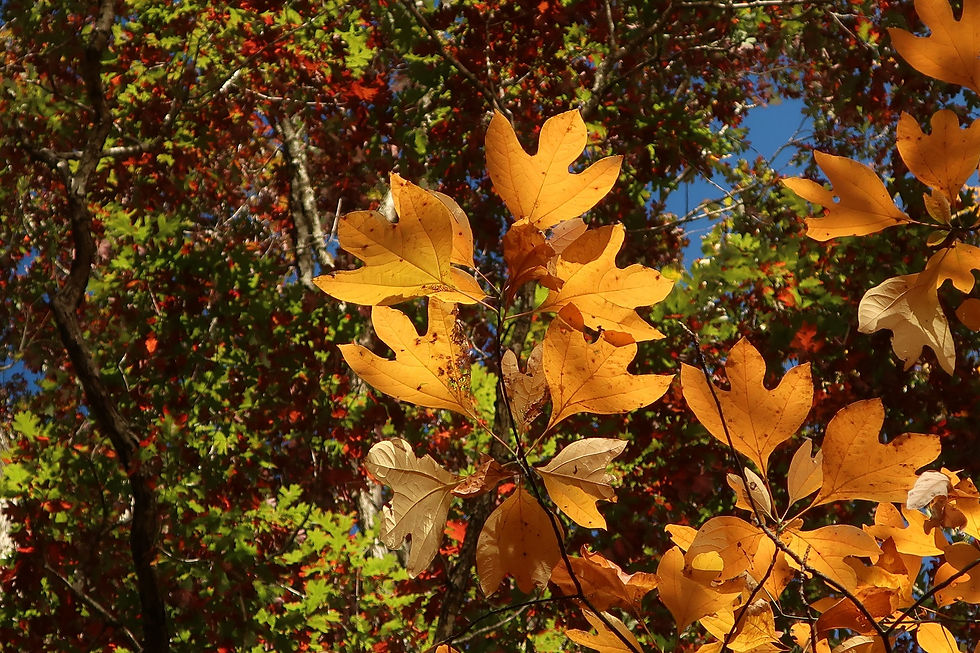
Autumn Leaf: Rusty Blackhaw
Rusty Blackhaw (Viburnum rufidulum) isn't very well-known in our area. There aren't many of these around, and they are small and found mainly in the understory. But this native tree has many wonderful qualities.
The tree has glossy, dark green, finely toothed leaves. Its leaf stems are clothed with a dense, rusty-red pubescence. The bark typically separates into dark, rectangular plates, looking similar to the bark of flowering dogwood. It produces clusters of showy, creamy-white flowers during spring.
And then autumn arrives, and its foliage turns a beautiful, rich reddish purple. Small, blue-black fruits with a waxy coat appear in the fall months. The sweet, edible fruits hang from the tree in clusters and are relished by birds and small mammals - and also by me! They are sometimes called wild raisins, and they are yummy.
This is just a wonderful all-around native tree, and I wish there were more of them.
Spooky Tree: Shagbark Hickory
This is another repeat tree, as I also mentioned it as an impressive fall color tree.
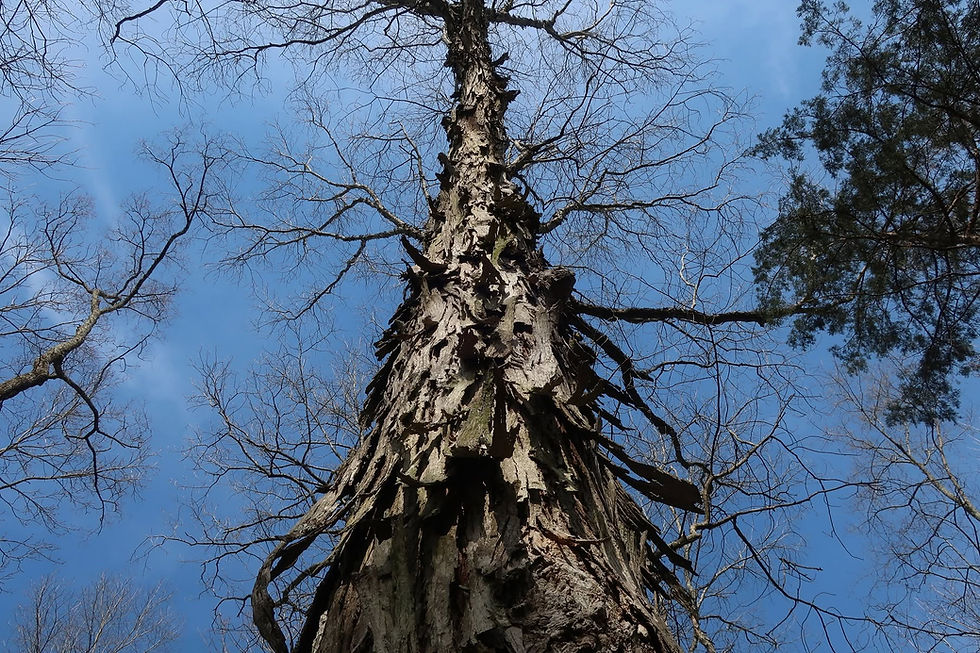
Shagbark hickory is the most common hickory species where I live, so I get to spend a lot of time around them. It grows in a wide range of habitats, from dry woods to low, shaded forests. The thick-shelled nuts are sweet and once were a staple food for Native Americans. It's also an important food for deer, squirrels and many birds.
Shagbark its recognized by its bark, which is light gray, fissured and peels off in long, curling strips, giving it a "shaggy" appearance. Yes, they are certainly gnarly looking, but I wouldn't necessarily call them spooky.
However, investigate them more closely and you might get an unexpected jump scare. That's because critters often roost under the loose bark. I've checked under the bark and found butterflies, moths, lizards, and - eeek - bats!
Beware!
Autumn Leaf: Winged Sumac
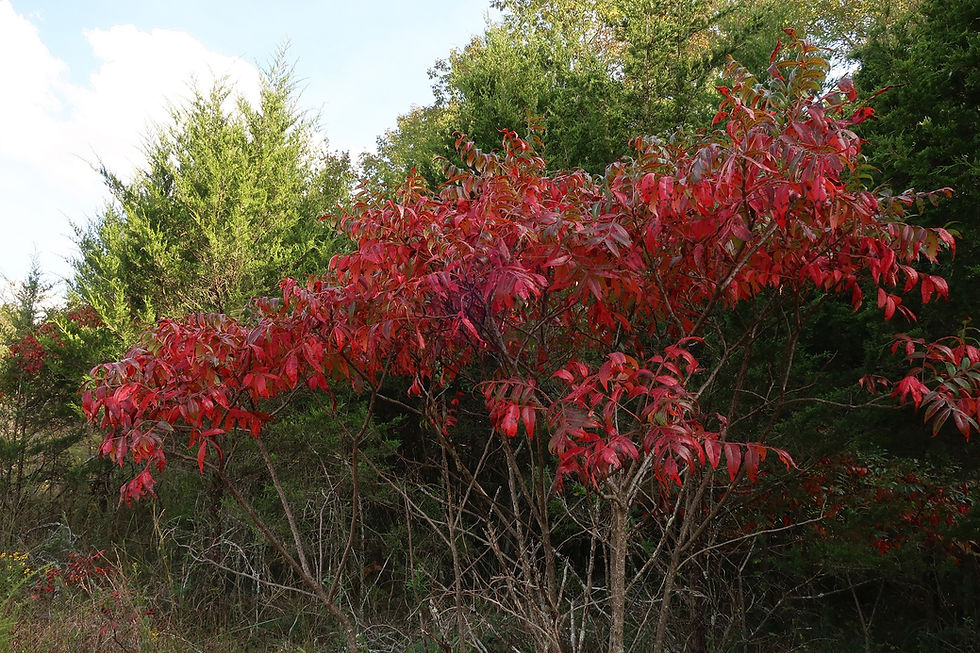
The very first fall color I find every year belongs to Winged Sumac (Rhus copallinum). I see this species in the grassy barrens near my home, and this year I found bright red foliage way back in July.
This native species is quite striking when flowering. I love the glossy foliage, the winged leaf axis and of course the brilliant red fall color.
It's also known as Shining Sumac due to the shiny leaves. Most of the specimens I see around my area are 5-8 feet tall and would be considered shrubs, but I've seen others that were nearly 20 feet tall and tree-sized.
When you see this species changing color during summer and fall, it almost appears as if the fields are on fire.
Spooky Tree, er, Cactus: Eastern Prickly Pear
Yes, I'm cheating. A cactus is not a tree. But I had to give some props to this native species that grows on my property.
Eastern Prickly Pear (Opuntia cespitosa) comes in all shapes and sizes. Their spectacular flowers bloom between mid-May and early June.
The reddish fruits, which ripen later in the year, are edible and can be made into a yummy jelly or a refreshing drink. The tender young green pads are also edible; once the spines are removed, they can be peeled and cooked like string beans. The plant is also known as Indian Fig and Devil's Tongue - bonus Halloween points!
A wide variety of animals feed on the fruit, seeds and stem of the prickly pear. Some wildlife take shelter under the shade of the large pads, and some animals even use broken-off pieces of the spiny pads to protect their nests.
Having spent many hours of my life trying to remove prickly pear spines from my fingers (and other areas), let's just say I have a healthy respect for this wicked plant.
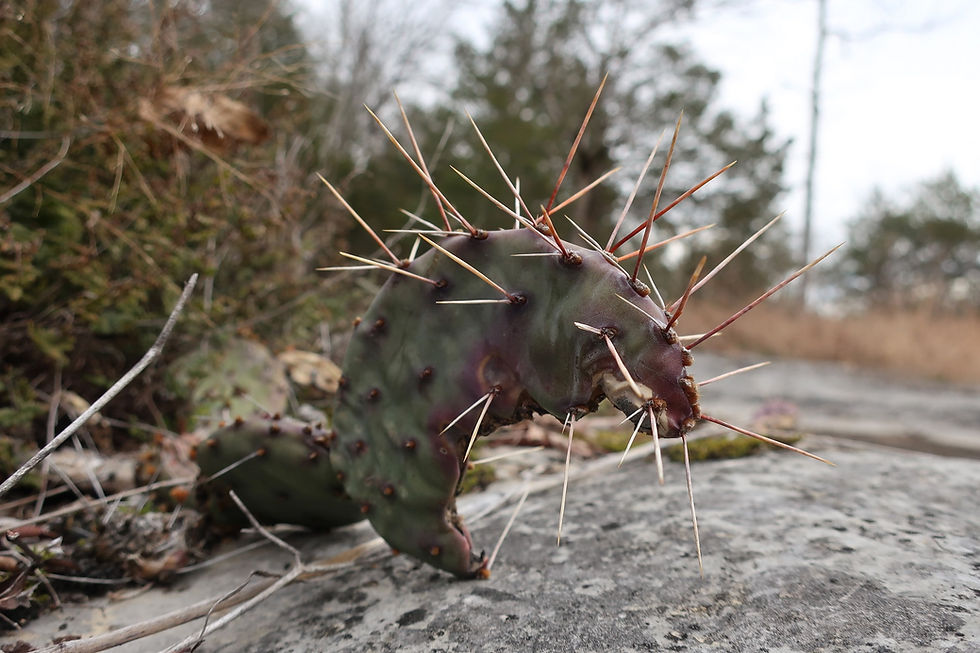
Which leads me to a photograph of my favorite prickly pear. No, this is not a scene from the latest Godzilla movie. This is an actual prickly pear which lives not far from my house.
Okay, I guess that's enough talk about cactus monsters and spooky trees and such. I hope we didn't scare anyone away. Now back to our regularly scheduled program...
---
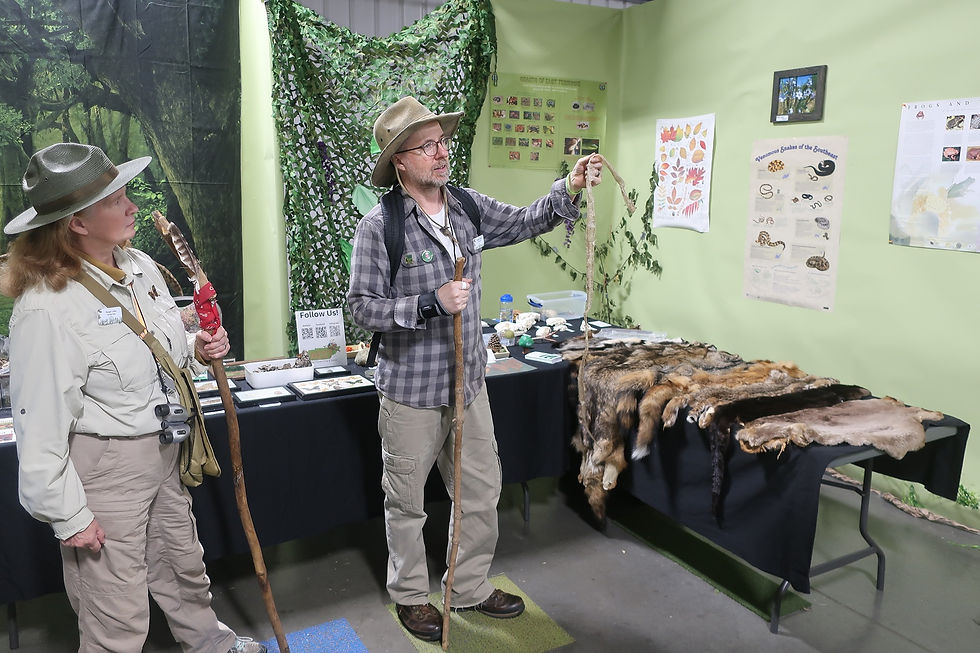
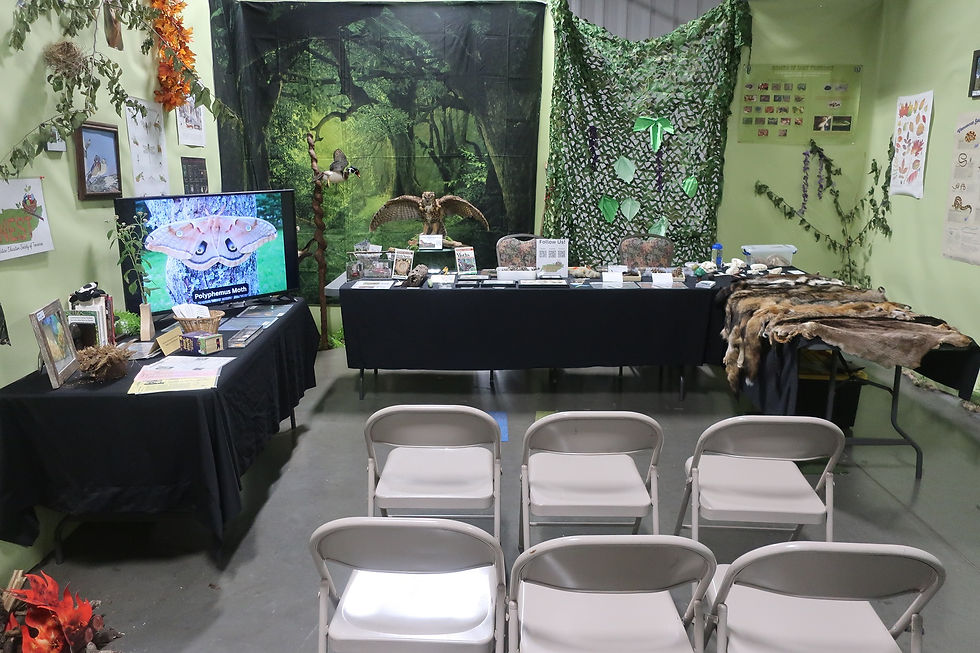
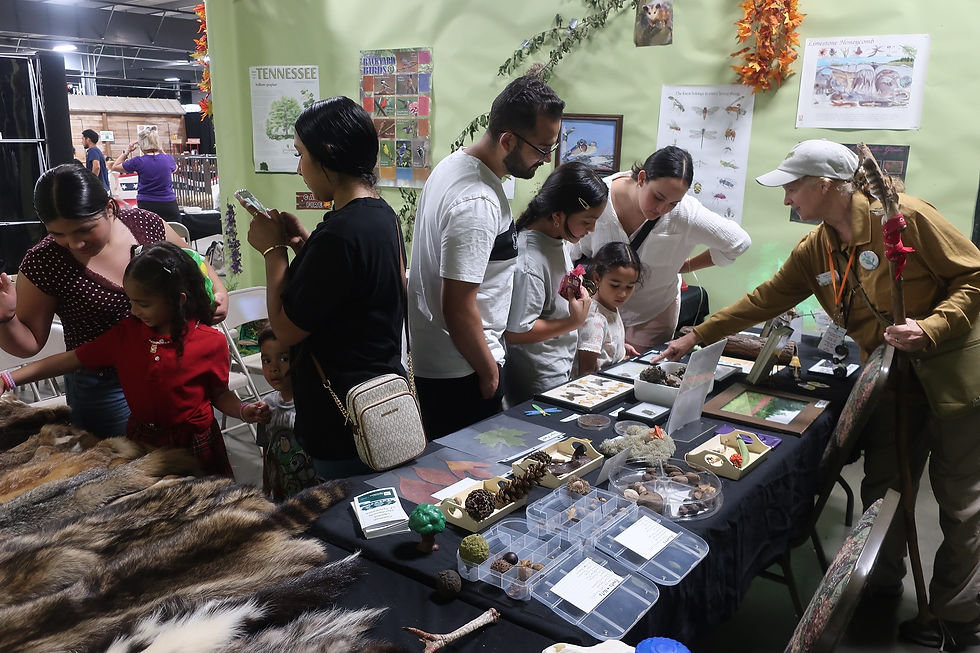
In other news, Leslie Anne and I just finished up a once-in-a-lifetime experience at the historic Nashville Fairgrounds. What a fun and fulfilling 10 days of showcasing the plants and animals of Tennessee at the Nashville Fair!
Thank you to everyone who dropped by our exhibit and attended our shows. Over a thousand people visited our NEST/Discovery Forest area in the Creative Arts Expo building, and we had wonderful conversations with folks from all over the country and all over the world.
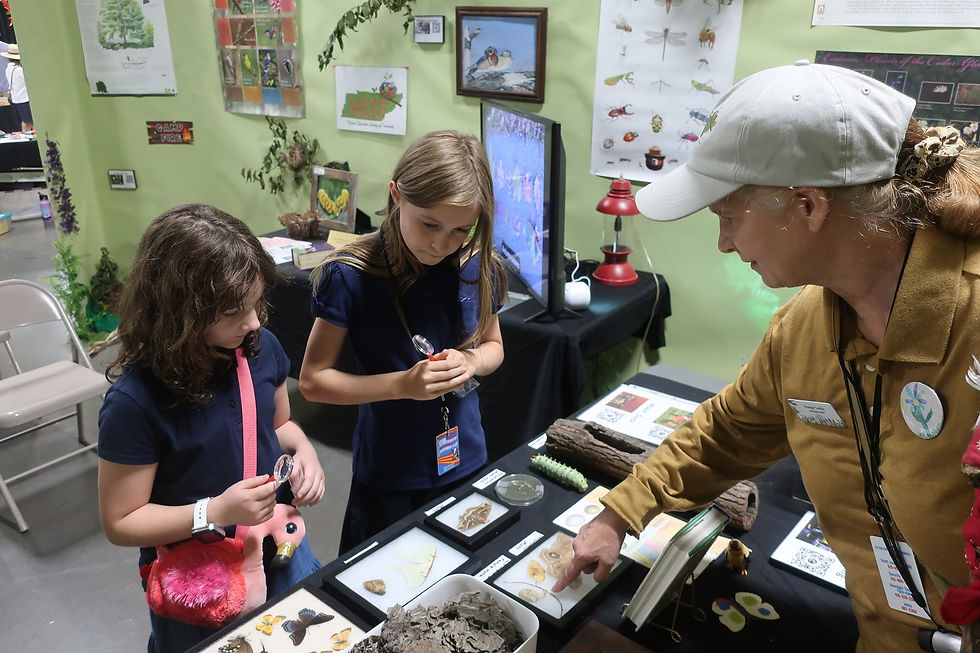
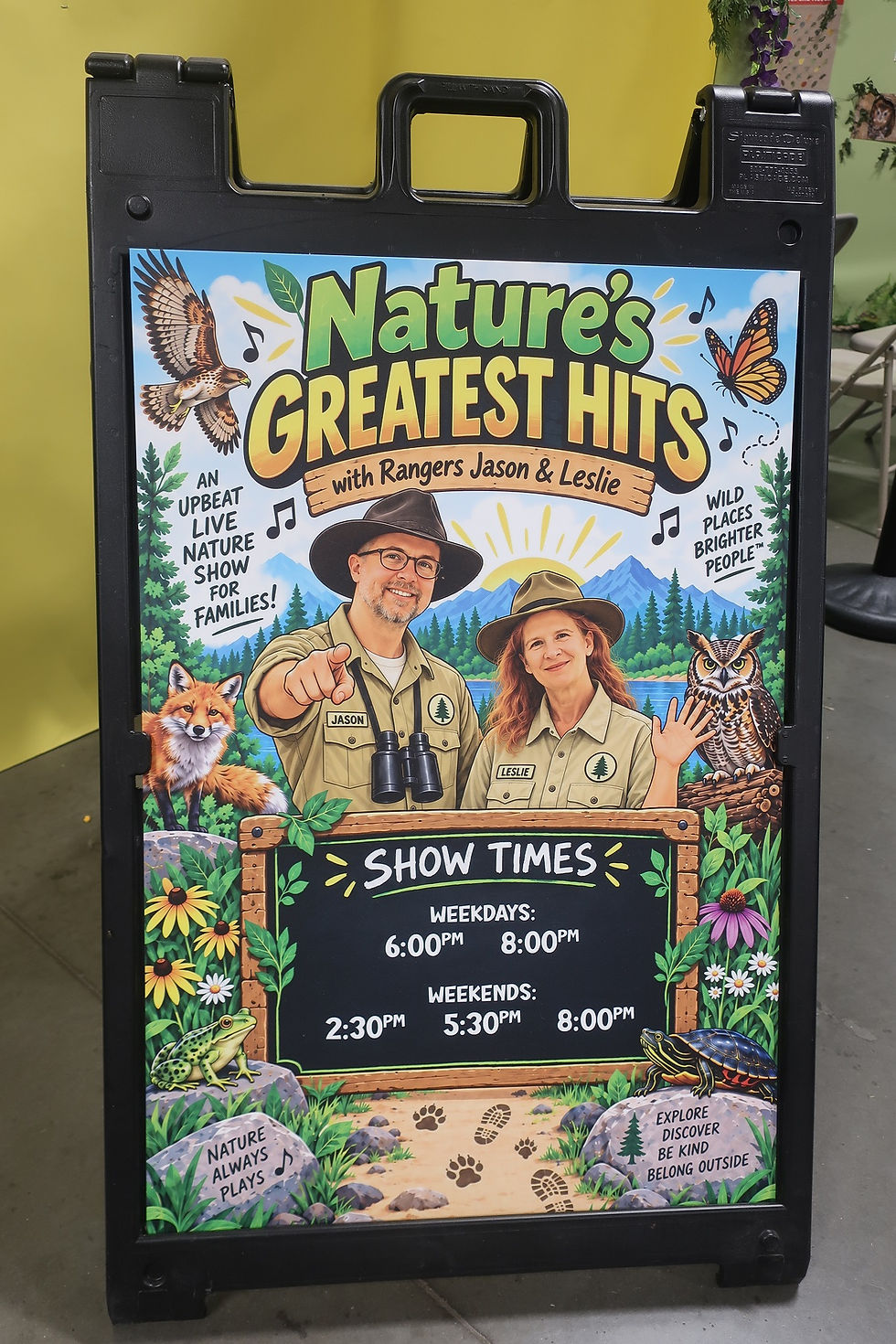
Our show was called "Nature's Greatest Hits with Rangers Jason & Leslie." The show focused on the flora and fauna of Tennessee. Here is our page on the Nashville Fair website: https://www.nashfair.fun/events/2026/natures-greatest-hits
Thanks to Chad Allen, Christa Ellis and Scott Pessoni for helping out with our shows. We also appreciate the many friends who let us borrow items and photos for our exhibit. We couldn't have pulled this off without you!
And a special shoutout to our ol' pal Bigfoot for making a few surprise appearances. Now that he's gotten a taste of corn dogs and funnel cakes, I doubt he'll be returning to the woods.
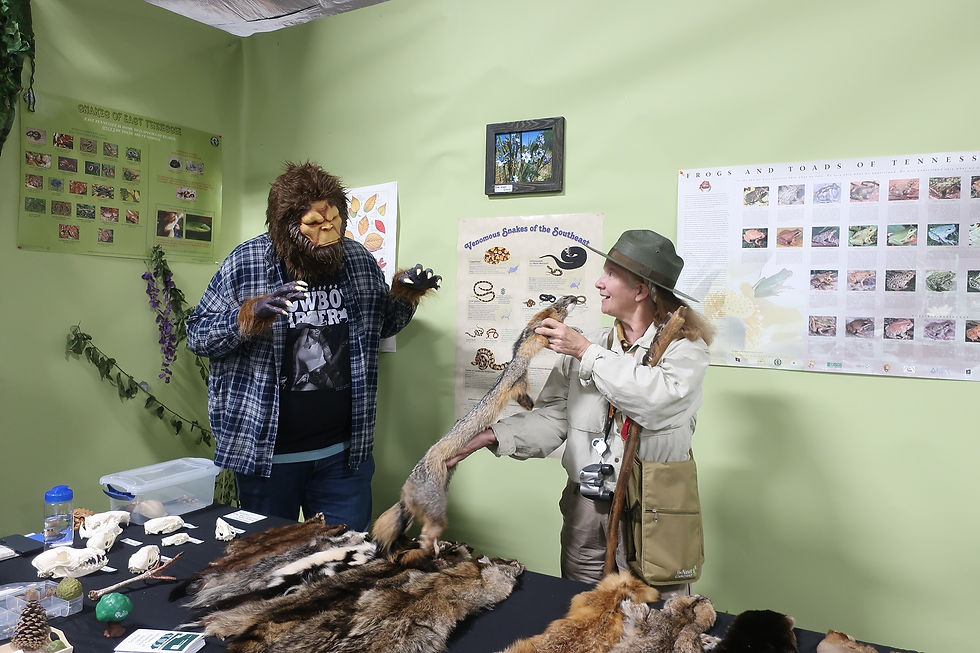
Last but not least, thank you to Jami Anderson, Jessica Ozburn and Scott Jones for inviting us to be a part of the fair.
We are passionate about connecting people to nature, and the Nashville Fair gave us an opportunity like never before. It's an experience we won't soon forget.
---
Way back on Sept. 1st, Leslie Anne and I gave a presentation on the cedar glades of Middle Tennessee for the "Lunch and Learn" program in Crossville, Tennessee. The event took place at the wonderful outdoor classroom at Obed River Park & Arboretum in Cumberland County.
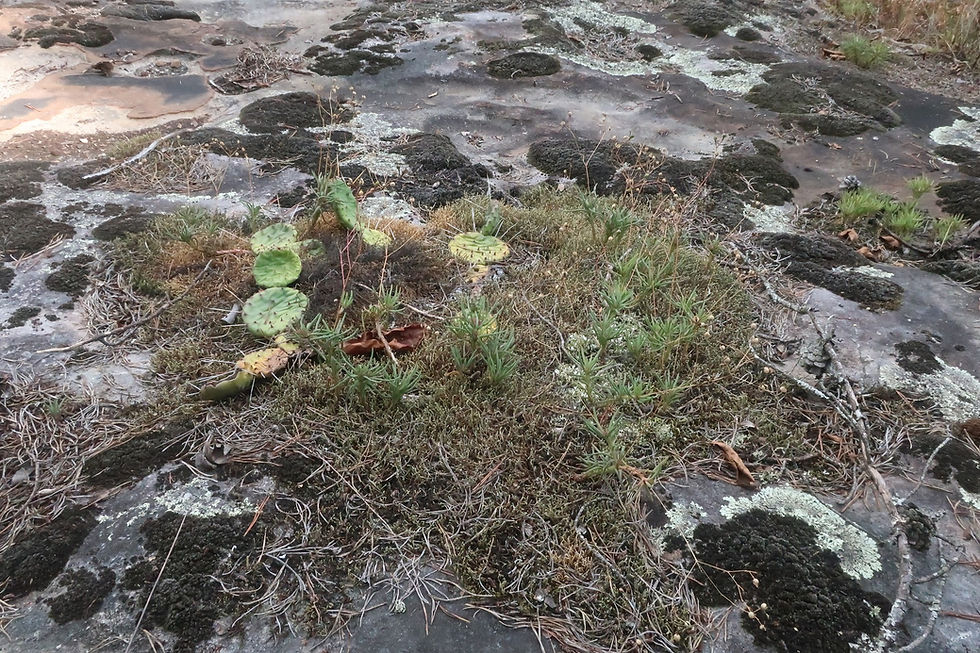
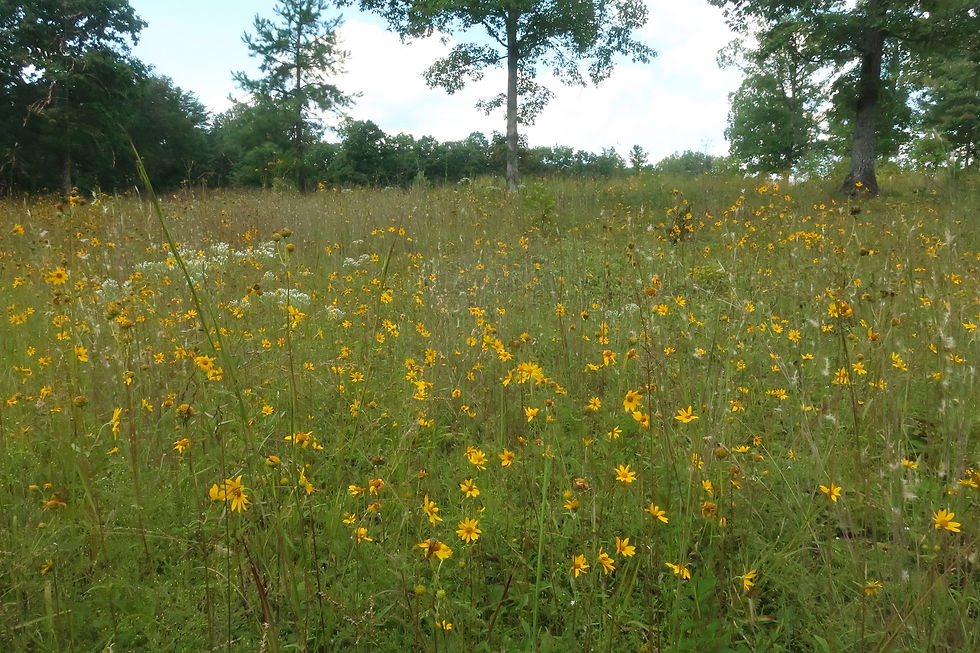
Following the presentation, we got a tour of several sites in the area, including a beautiful savanna, an arboretum trail along the river, and a rare (at least for us!) sandstone glade where we got to see a unique fameflower.
I must say, it felt strange to be standing in the middle of a rocky glade surrounded by pine trees and chestnut oaks rather than cedar trees and chinkapin oaks!
Thank you to Janet Dowlen for giving us a tour of the area. You're doing wonderful work there, and we look forward to getting back over there to do some more exploring.
Here are a few more photos from our Cumberland County adventure: https://www.facebook.com/groups/hipcedargladesTN/posts/28709887001941555
---
On Sept. 5th, NEST participated in the Wilderness Station's Hummingbird Festival in Murfreesboro, TN. The event featured hummingbird banding, conservation organization booths, craft booths, speakers, and all types of fun activities. https://www.murfreesborotn.gov/2726/Hummingbird-Festival
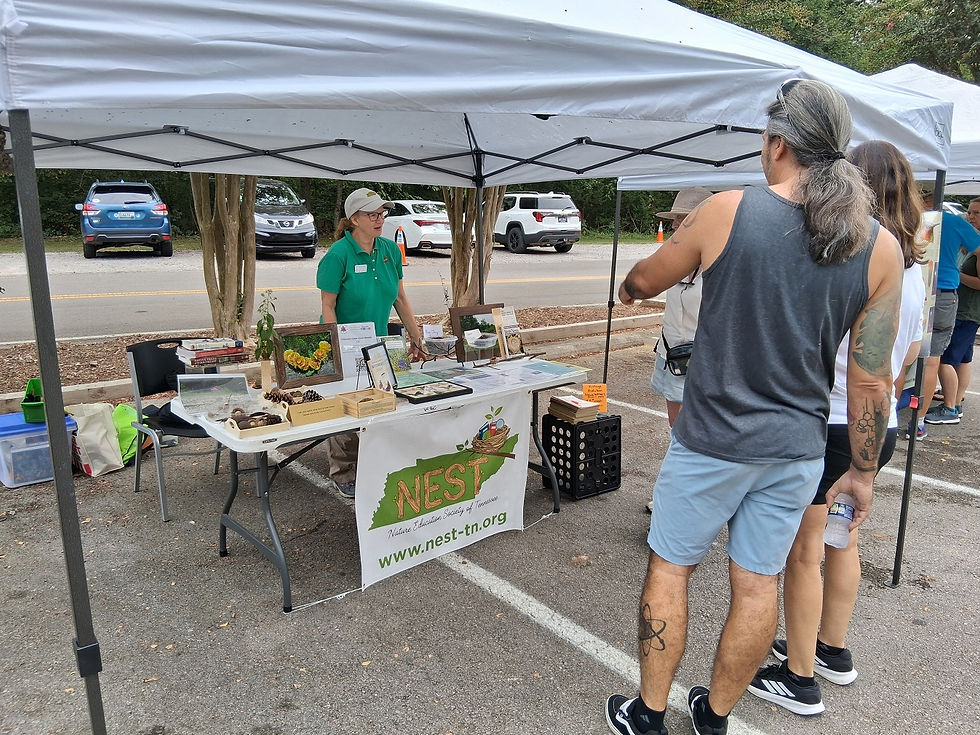
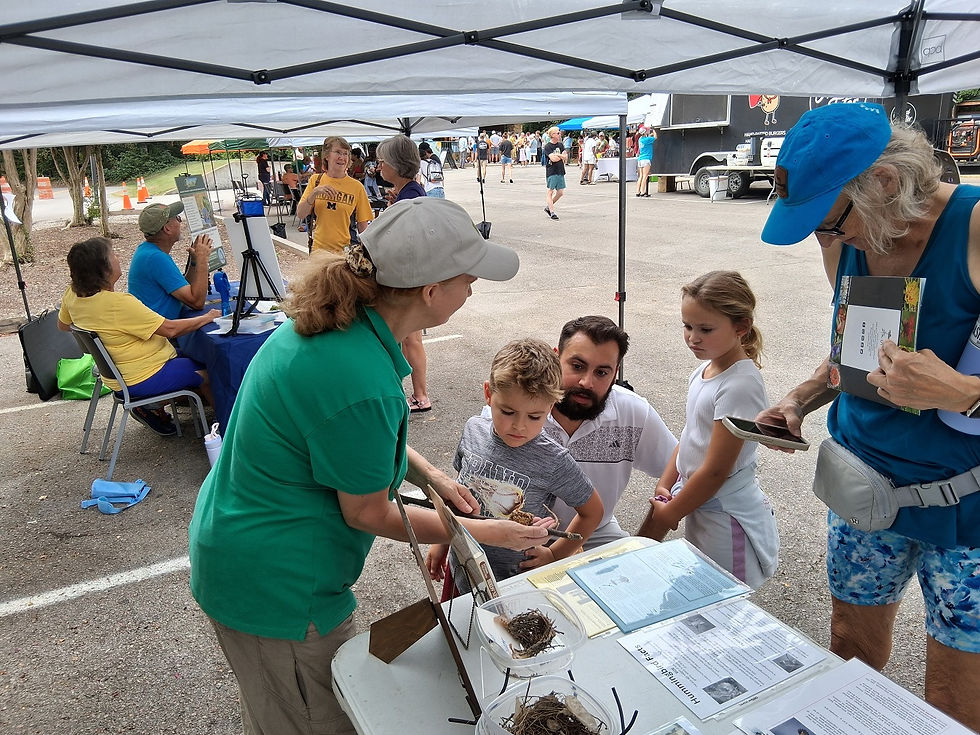
We had a table set up during this event, and we were amazed but thrilled by the large turnout. In fact, we spoke with so many people that we almost lost our voices! But it was a joy to connect with so many people, and we would gladly do it all over again.
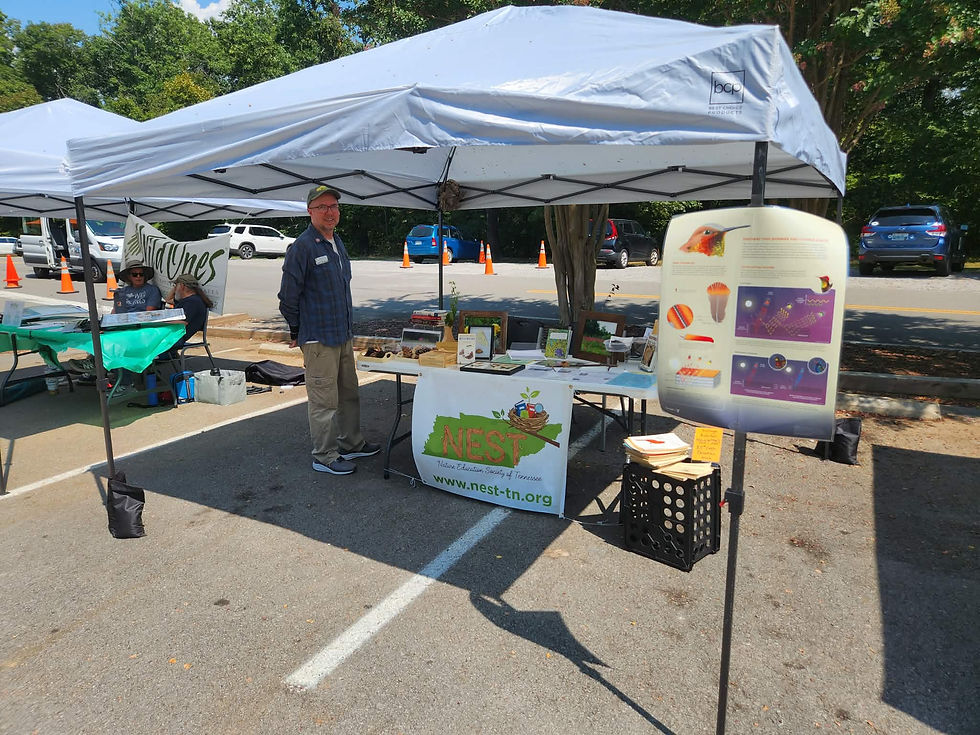
We were also happy that our tent was situated between two of our favorite organizations: Tennessee Naturalist Program and Wild Ones Middle Tennessee Chapter.
Leslie Anne's hummingbird nest was a big hit with the crowd. Attendees loved seeing the tiny nest and learning how hummingbirds build the nest.
What a wonderful day it was, and we're already looking forward to next year's Hummingbird Festival!
---
On Sept. 24th, we gave a presentation for the Nashville Chapter of the Tennessee Trails Association at their monthly meeting in Green Hills. The presentation was titled NEST Presents: Nature's Greatest Hits! https://tennesseetrails.org/event/nest-presents-natures-greatest-hits/
For this special program, rather than focusing on one particular subject, Leslie Anne and I basically talked about "a few of our favorite things." Topics included favorite wildflowers, trees, hiking trails, natural areas, birds, frogs, insects, night critters, unusual findings, wild edibles, and more.
We had a blast doing this new program, and we hope to do similar presentations in 2027.
One of the first organized hikes I ever attended was with Tennessee Trails Association in the 1990s, and I have been a supporter and admirer of this wonderful organization ever since. We are fortunate to have them in Tennessee.
Check out the TTA website (https://tennesseetrails.org/), browse their many upcoming events, and go for a hike with them!
---
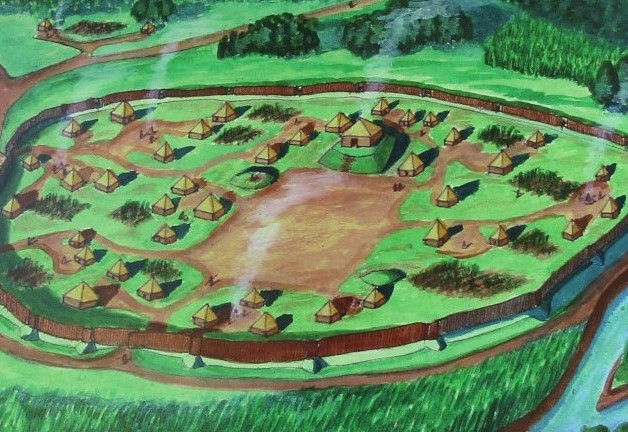
Our NEST Wildflower ID Class wrapped up in late August, and Leslie Anne led the students on their final field trip on Sept. 27th. The group went to Sellars Farm State Archaeological Area in Wilson County and enjoyed a wide array of plants and trees on a nice autumn day.
This is the 10th year Leslie Anne has taught this popular class, and she is planning to offer another class in early 2027. You can view more info about our wildflower classes at https://www.nest-tn.org/wildflower-classes
Stay tuned for the announcement of our 2027 class!
---
On Oct. 10th, NEST will be a part of the Nature Day: Backwoods to Backyards event (formerly Conservation in Action Expo) in Murfreesboro, TN. This event is presented by Murfreesboro Parks & Recreation.
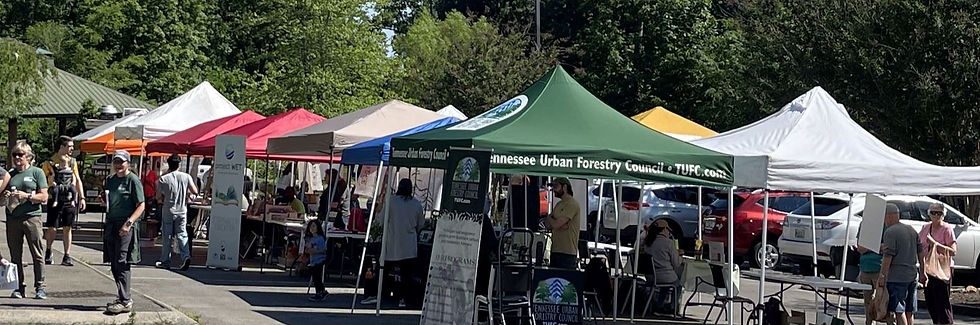
Nature Day will include hikes, presentations, exhibits, and other activities. There will also be a native plant sale and food trucks. More info at https://www.murfreesborotn.gov/2716/Nature-Day
We are excited to be a part of this gathering once again. Our very first appearance as NEST was at this event last October, so it definitely has a special significance to us. If you get a chance to attend, stop by our table and say hello.
---
We wish you all a safe and happy month of October. And please let us know if you run across any memorable leaves or spooky trees!
All the best,
Jason and Leslie Anne


Comments