
Frog Town + New Wildflower Class = Summer Fun!

It's time to visit Frog Town! That's one of my first thoughts every year when June arrives.
I'm fortunate to live near several frog hot spots, but one in particular I have named Frog Town due its abundance and variety of frogs. Once I heard eight different species calling while standing in the middle of Frog Town.
Do you have a favorite frog spot? If you live near a lake, pond, creek, or other wetland area, you're likely hearing frogs this time of year - especially after rain. If not, then I encourage you to seek out your own Frog Town this month.
Of course, in Tennessee many frogs are calling long before June arrives. I sometimes hear Upland Chorus Frogs on warm days in January, and they typically peak in February. Spring Peepers are early callers as well. Then many other species get into the act in March, April and May.
But June is when I hear the most variety as many of the early callers are still vocal and overlapping with the later arrivals. With that in mind, I would like to mention some of my favorite frogs to listen for during the month of June.

As mentioned earlier, the first frog I hear each year - no later than February - is the Upland Chorus Frog. Their unique call, described by some as the sound of someone rubbing their finger across the teeth of a comb, makes them easy to identify by sound. During mild weather in late winter, their vocalizations often fill the woods at night. Chorus frogs are small, well camouflaged (brownish or grayish), and rarely seen. Normally they've stopped calling here by the end of April, but in late May (following a lot of rain) I suddenly heard them calling again. They seemed to be rejoicing at FINALLY getting some much-needed rain. Listen to the call of the Upland Chorus Frog here.
A bit later, starting in April or May, I listen for the Fowler's Toad. They are frequently heard near a lake beside our home on spring evenings, with their drawn-out "waaaah" calls echoing across the water. In fact, I've heard them almost every night lately. Of all the species found in my area, these are the ones that humans are most likely to see. They are medium size, brown to gray with black warty spots, and are often found resting on logs or beside trails - or hopping around the parking lots. I've found them resting on the floor of my barn. You may still hear a few calling in June and July. Listen to the Fowler's Toad here.
Calling soon after the Fowler's Toad - or often at about the same time - is the Cope's Gray Treefrog. As their name implies, these medium-sized grayish/greenish frogs spend much of their time in the treetops. Their short "trilling" calls are distinctive and often create a symphony of sound in the night woods. During frog programs I've led over the years, we've often found large numbers of Cope’s Gray Treefrogs clinging to trees beside ponds and sinkholes. Listen to the Cope's Gray Treefrog here.

If you've ever heard a sound in the woods like two marbles click-clacking together, then you probably heard the call of the Northern Cricket Frog. During late spring and summer these frogs can be heard regularly around area lakes, even in daylight hours. I heard many calling from a cove at Percy Priest Lake just last week. These tiny, dark, well-camouflaged frogs are generally located at the water's edge, but they are difficult to find by sight. However, their distinctive sound lets you know they are around. There are also Southern Cricket Frogs in Tennessee, but they are mostly limited to the extreme southwestern part of the state. Listen to the Northern Cricket Frog here.

Perhaps the most comical frog call in our area is the Eastern Narrow-mouthed Toad. When these guys start calling, you might think your local wetland has been invaded by a pack of wild sheep! But no, the high-pitched bleating sound you hear is just these tiny, dark-colored, pointy-headed frogs. I've been hearing many of these following the recent rains. Like the cricket frog, Eastern Narrow-mouthed Toads are well camouflaged and very difficult to see. During late spring and summer, you will often hear them calling during the day around lakes, wet ditches, and swampy areas. Listen to the Eastern Narrow-mouthed Toad here.
One of the newest additions to Middle Tennessee is the unmistakable Green Treefrog. I had never heard this species in our area until the summer of 2010. Since then, I've been hearing them every year beside the lake near our home. I've even found a few on my front porch! Their loud, unusual call (a nasally, repeated "queenk, queenk, queenk") and bright lime green color make them easy to identify by sight or sound. Traditionally a West Tennessee species that favor swampy habitats, Green Treefrogs normally start calling here in June, although this year I heard my first calls during a rainy week in late May. Listen to the Green Treefrog here.

The American Bullfrog is the largest frog in Tennessee and the largest native frog in the U.S. They are green-to-brown in color and can be identified by their deep, base-filled "vroom" call. We heard several calling in late April while leading a wetlands night hike at Murfree Spring in Murfreesboro. Being the "king" of frogs around these parts, the bullfrog is known to eat literally anything it can fit into its mouth - including snakes, frogs and even small birds. Listen to the American Bullfrog here.
A close relative of the American Bullfrog is the Green Frog, which is slightly smaller than a bullfrog and greenish/brownish in color. Their call, which sounds similar to someone plucking a broken banjo string, is sometimes a single "glunk" or a descending "glunk, glunk, glunk."
Green Frogs are often heard around sinkholes and ponds in my area, both during the day and at night. We heard several during our recent Murfree Spring hike. Listen to the Green Frog here.

The Southern Leopard Frog is another species that stands out by sight and sound. This medium-sized frog has dark round spots on its green-and-brown back, similar to a leopard. Its pointy snout also sets it apart from other local species. Its call is difficult to describe but sounds similar to someone rubbing their finger on a balloon, fast and repeatedly. I started hearing these in April, and they will continue to call into the summer months. Listen to the Southern Leopard Frog here.

Yet another species to listen for is the American Toad. It’s similar in appearance to the Fowler's Toad but has one or two warts per black spot, while the Fowler's Toad has three or more. Also, the American Toad has cranial crests that do not touch the parotoid glands (a raised, wart-like structure located just behind the eyes and eardrums) as they do with the Fowler's Toad. Although their call (an extended trill lasting up to 20 seconds) is heard infrequently around my home, they are heard in large numbers in other areas of Tennessee. The spillway area at Radnor Lake is a good place to hear them. Listen to the American Toad here.
These are by no means the only frog species you'll hear in Tennessee during June, but these are some favorites found in my neck of the woods.
What frogs are you seeing and hearing? Let us know!
- - -
I couldn't let a June newsletter slip by without mentioning one of the most famous wildflowers in our state: the Tennessee Coneflower (Echinacea tennesseensis). June is typically its peak flowering month, and if you've never seen this species at its peak, do yourself a favor and go see them!
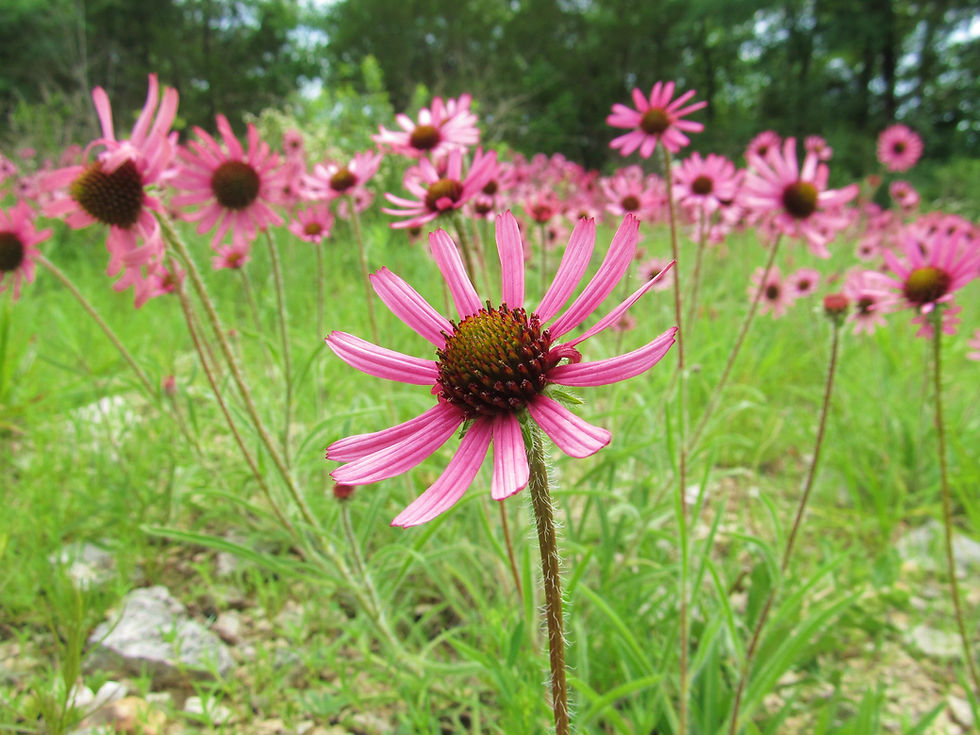
Botanist Augustin Gattinger first discovered this species in 1878 in Rutherford County. But for much of the 20th century, the Tennessee Coneflower was thought to be extinct until Vanderbilt biology professor Elsie Quarterman rediscovered it in Davidson County in 1968. In 1979, the plant became one of the first wildflowers to be listed under the Federal Endangered Species Act.
In the years that followed, several local, state and federal agencies - as well as landowners, volunteers and other individuals - worked together to protect the plant's habitat and establish new colonies from seed. And then in August of 2011, thanks to 30-plus years of dedicated conservation work, the U.S. Fish and Wildlife Service removed the Tennessee Coneflower from the endangered list. For botanists, conservationists and nature lovers in general, the Tennessee Coneflower is one of Tennessee's brightest success stories.
Despite its resurgence, Tennessee Coneflower will likely never become a widespread plant. It's found only in three U.S. counties - Davidson, Rutherford and Wilson counties in Middle Tennessee. Within those counties it occurs only in the rare desert-like areas known as cedar glades, which are characterized by exposed limestone and thin, rocky soil surrounded by cedar trees.

Some of the best places to view the Tennessee Coneflower are Cedars of Lebanon State Park, Stones River National Battlefield, Vesta Cedar Glade State Natural Area, and Couchville Cedar Glade State Natural Area.
If you decide to go on a pilgrimage to see Tennessee Coneflower, just know that it isn't the only unique plant blooming in the cedar glades this month. Other blooms to keep an eye out for in June include Wavyleaf Purple Coneflower, Prairie Coneflower, Limestone Fameflower, Shrubby St. Johnswort, Round-fruited St. Johnswort, and Lanceleaf Gumweed. There may even be some Eastern Prickly Pear blooms still around.
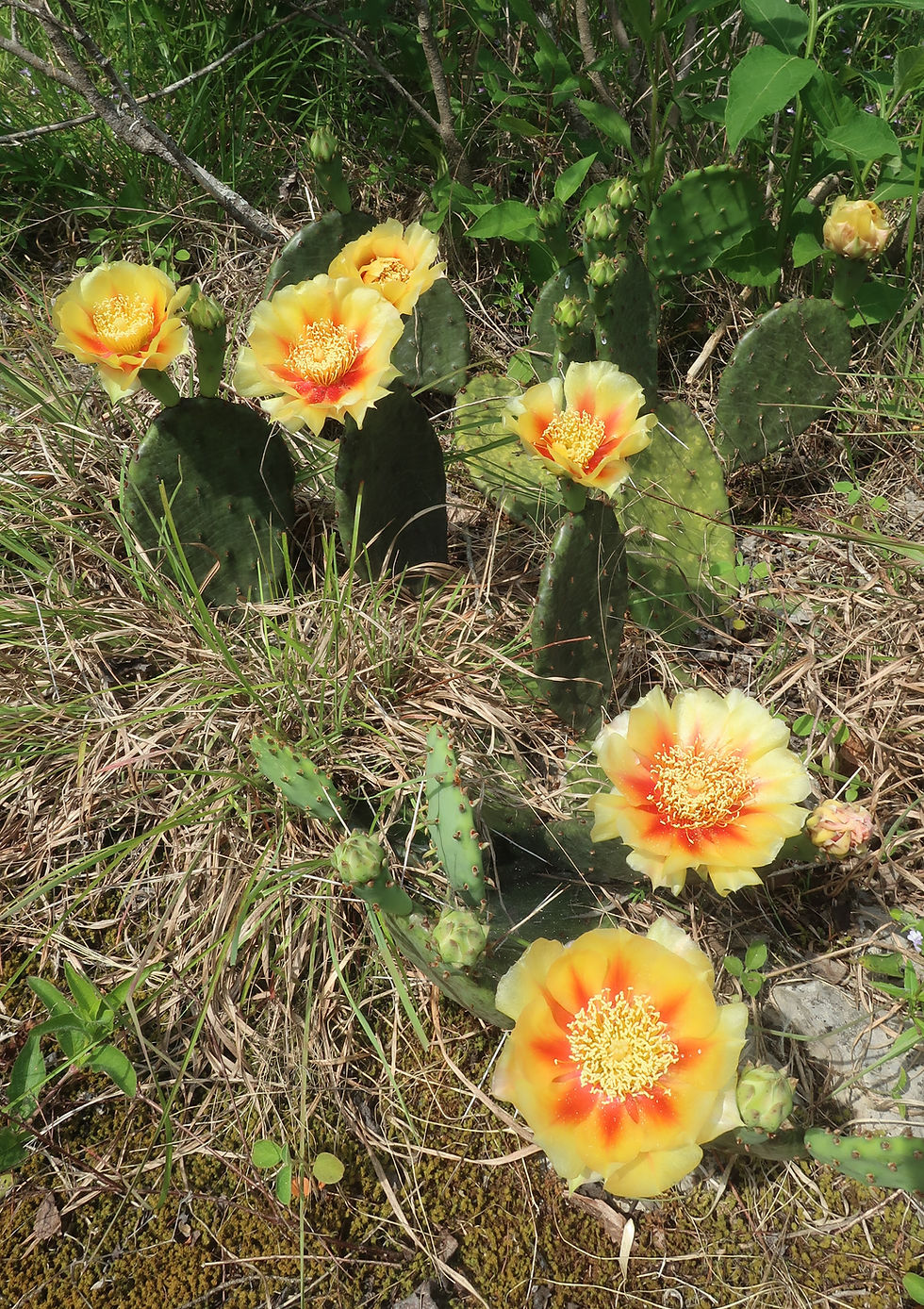
Also, several milkweed species are now blooming in the glades and barrens, including Green Comet Milkweed, Butterfly Milkweed, Anglepod Climbing Milkvine, Maroon Carolina Milkvine, and Whorled Milkweed.
- - -
Speaking of Tennessee Coneflower, the highlight for us during the month of May was a special hike led by NEST founder Leslie Anne Allen to Mount View State Natural Area as part of the 48th Elsie Quarterman Cedar Glade Wildflower Festival. Mount View, located in Antioch in Davidson County, was the site where Elsie Quarterman and one of her students rediscovered the Tennessee Coneflower back in 1968.
We saw several rare and unique glade species, and we also learned about the life and work of Dr. Quarterman. As an added bonus, we even found an early Tennessee Coneflower in bloom! It was a magical experience on a beautiful day, and we certainly felt Elsie there with us.

The Elsie Quarterman Cedar Glade Wildflower Festival was another great success, and this year it was a four-day event for the first time ever. What a memorable and inspiring four days of celebrating and exploring the cedar glades and honoring Dr. Quarterman!
A few other highlights from the festival:
- Hearing all three nightjars - Chuck-will’s-widow, Eastern Whip-poor-will, and Common Nighthawk - during our NEST night hike at Vesta Cedar Glade.
- Seeing such great attendance (and witnessing so much creativity!) for the first ever Thursday “Art in the Park” programs, which were led by Erin Anfinson and Mary Priestly.
- Phil Hodge relating cedar glades to archaeology in his fascinating program “The Archaeology of Cedar Glades and Limestone Landscapes.”
- Setting up our NEST table in the Cedar Lodge on Saturday and hanging out with our friends from Tennessee Native Plant Society, The Tennessee Conservationist, Wilson County Master Gardener Association, Outdoor Murfreesboro, Tennessee Naturalist Program, and Wild Edibles with Sharen Patterson Bracy.
- The always informative Cedar Glade Research Roundtable, which featured such topics as bees of the cedar glades, the streamside salamander, and a comparison of the glade astragalus species. The program was capped off with a field trip to Vesta Cedar Glade State Natural Area, which had recently undergone a prescribed burn.

Thanks to everyone who helped put the festival together and run the show, especially Kim Sadler and Shauna Bridgers. In case you didn’t get to attend this year, you can view images from the event here and also here.
We’re already looking forward to next year’s festival. Mark your calendar for May 2027!
- - -
Another highlight for us in May was presenting a "Springtime in the Cedar Glades" program for the Master Gardeners of Davidson County at Ellington Agricultural Center.
Their master gardeners group was so warm and welcoming, and we appreciated their enthusiasm. In fact, following our presentation the group asked if we would be willing to lead a cedar glade hike for them in the near future, and we certainly look forward to doing so!
Over the past three months we have presented programs for three different master gardeners groups in Middle Tennessee, and we are fortunate to have so many knowledgeable and hard-working plant enthusiasts in our area. They're all doing wonderful work, and we can't wait to collaborate with them again!
- - -
Following a busy spring of NEST hikes, programs and presentations, Leslie Anne and I have enjoyed a brief break to rest our bones and recharge our batteries. During this time, we've had many spirited conversations about all of the wonderful people we've met and the connections we've made. To say it's been a fulfilling year for us would be an understatement!

This June we look forward to connecting with the younger crowd as we'll be programming for summer camps at Stoney Creek Farm in Williamson County.
Another thing we're looking forward to this summer is attending classes, hikes and events led by some of our friends. In recent years we've rarely had time to attend programs by others because we were so busy doing programs ourselves. But this summer we hope to come see YOU!
Also, we can't wait to tell you about an event that we'll be involved in this September. We're still working out the details, but we hope to announce it in our next newsletter. Let's just say it will involve both environmental education AND a local fair. Nature programs + funnel cakes + carnival rides = a guaranteed good time!
Lastly, Leslie Anne recently finished up her spring NEST Wildflower ID Class. This is the ninth year she has taught this popular class. It was a wonderful group of students, and a lot of friends were made and a lot of plants were learned. It was capped off by memorable field trips to such places at Richard Siegel Glade, Short Springs State Natural Area, and Flat Rock Cedar Glades and Barrens.
Leslie Anne has been hard at work planning the next NEST Wildflower ID Class. Normally she offers only one course per year, but due to popular demand we will be offering another course this summer. It will begin on July 26th and will run through the end of August. Registration opens up TODAY, June 1st!

Class size is limited, and these always fill up quickly. If you know someone who might be interested, please help us spread the word! For more info or to sign up, go to https://www.nest-tn.org/wildflower-classes. We wish you a safe and happy month of June!
All the best,
Jason and Leslie Anne


LOVE your frogs and toads discussion, great pics AND sound clips. Here in Ky, the Dept of Fish and Wildlife put out a CD of Kentucky’s amphibian bounty. Required listening for us budding naturalists.
muz